
Petersburg, AK to Campbell River, B.C.
August 9 – September 2, 2025
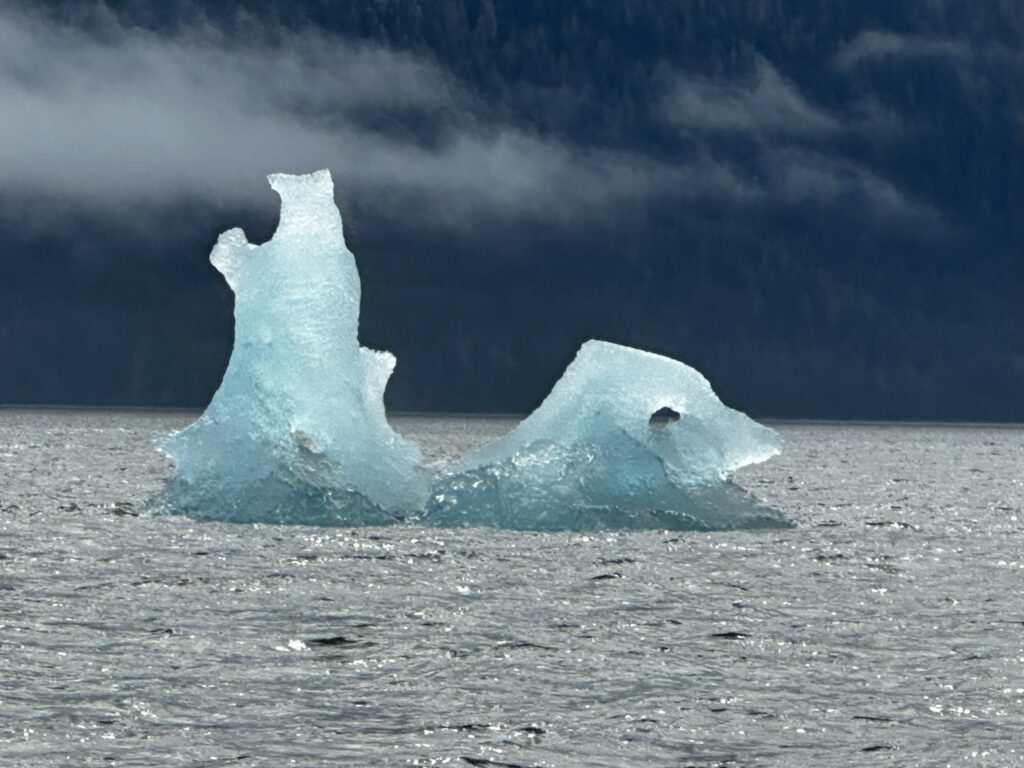
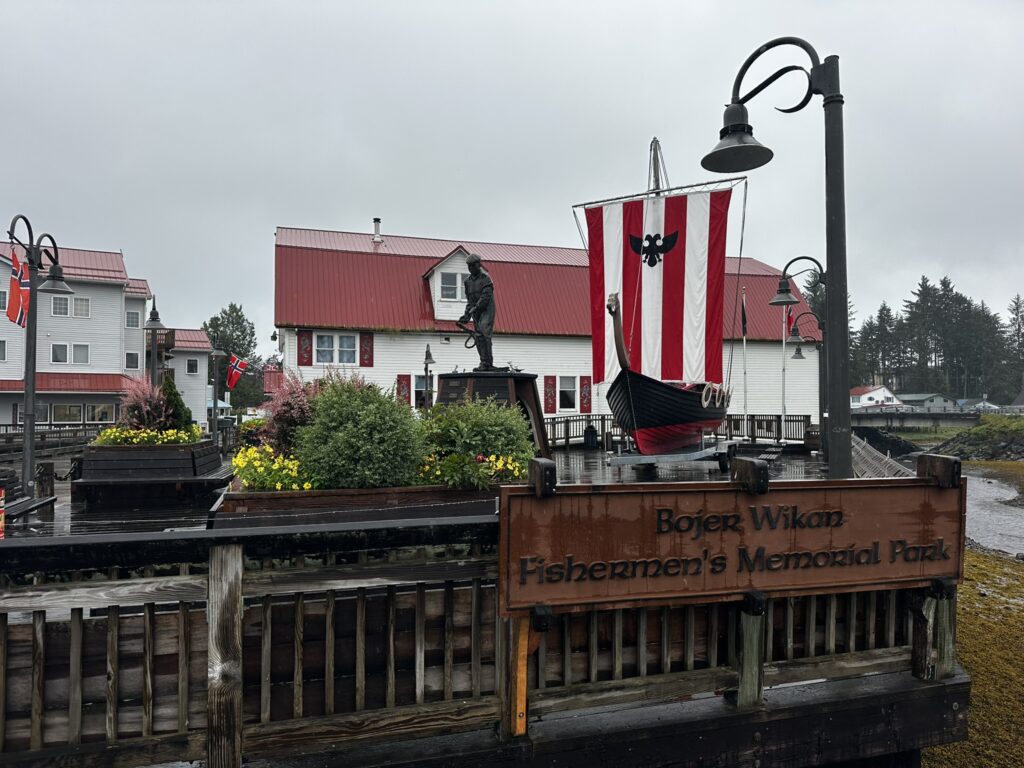
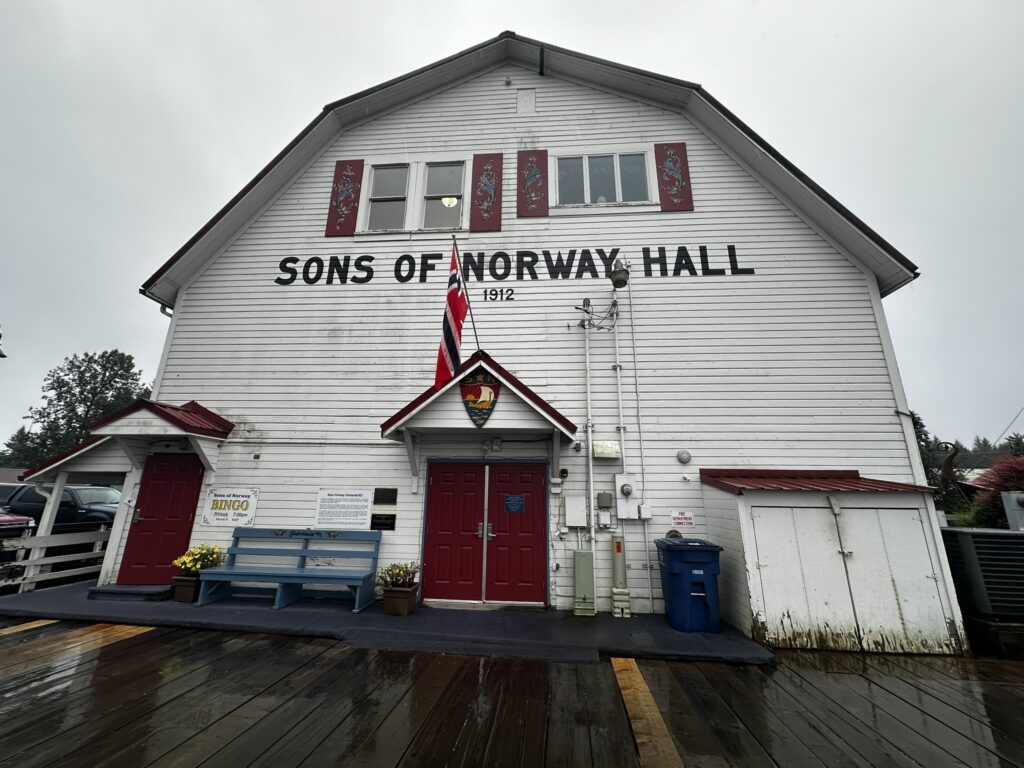
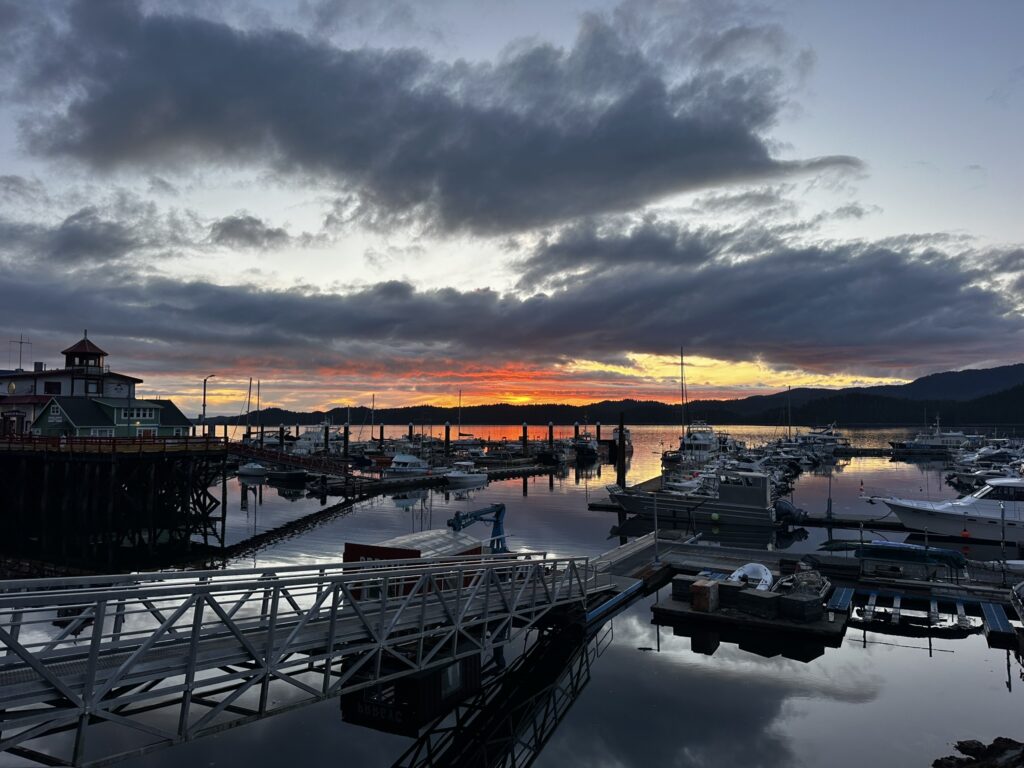
As the storm cleared, we headed to Petersburg, AK. We left Portage Bay early to catch the slack tide at the exit of the bay. Along the way we had time to kill waiting for the currents in Wrangell Narrows to slow, so we took the time for a leisurely day sail. We encountered our first icebergs of the trip that had drifted down from the Le Conte glacier. We then headed for our slip in the Petersburg marina. With a strong current running, getting into the slip was a bit challenging but we managed. Petersburg is a small, working town with strong Norwegian heritage. We enjoyed walking around the town, restocked our groceries, did laundry, and enjoyed pizza and beer with the crew of SV Kairos.
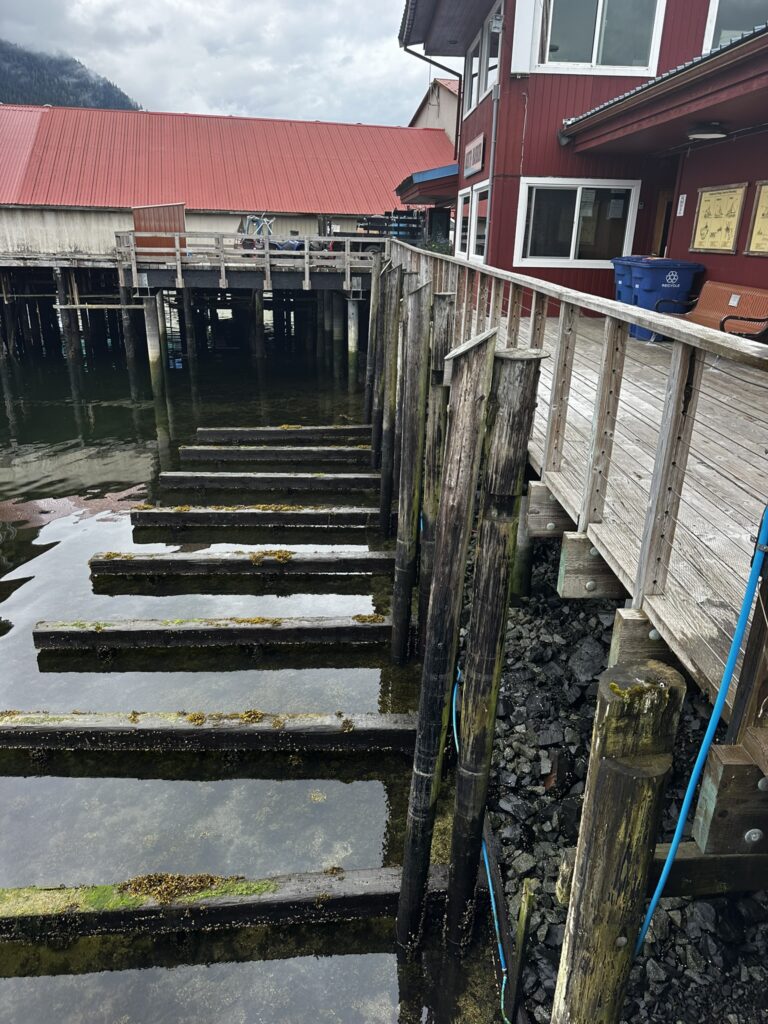
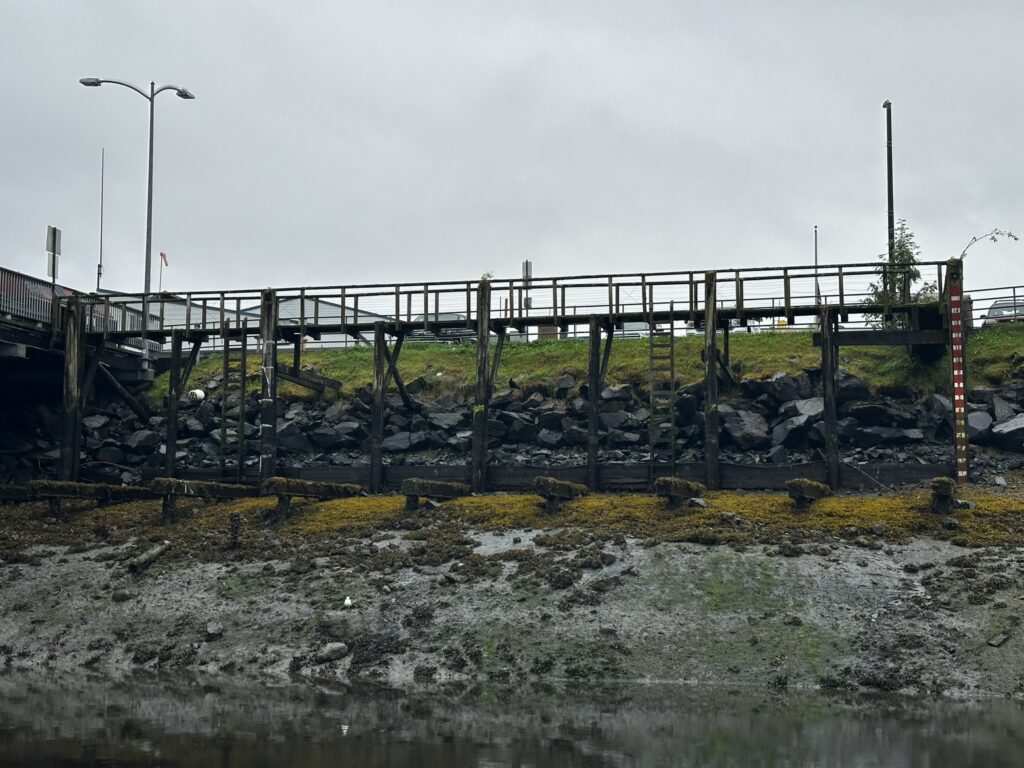
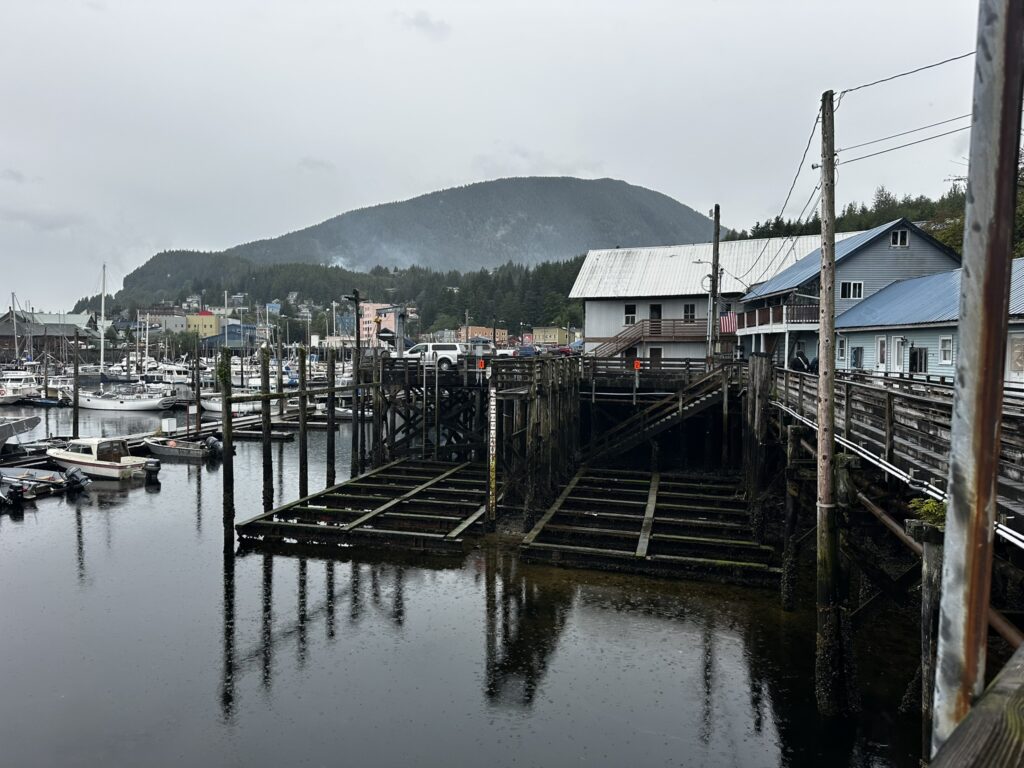
The tides in Alaska have a huge range between high and low tide, sometimes as much as 20 feet or more. Using this to their advantage, the locals use grids to work on the bottom of their boats. At high tide you pull your boat onto the grid and secure it. Then when the water recedes at low tide, the boat is essentially out of the water and any work on the bottom can be completed, until high tide floats it again about six hours later.
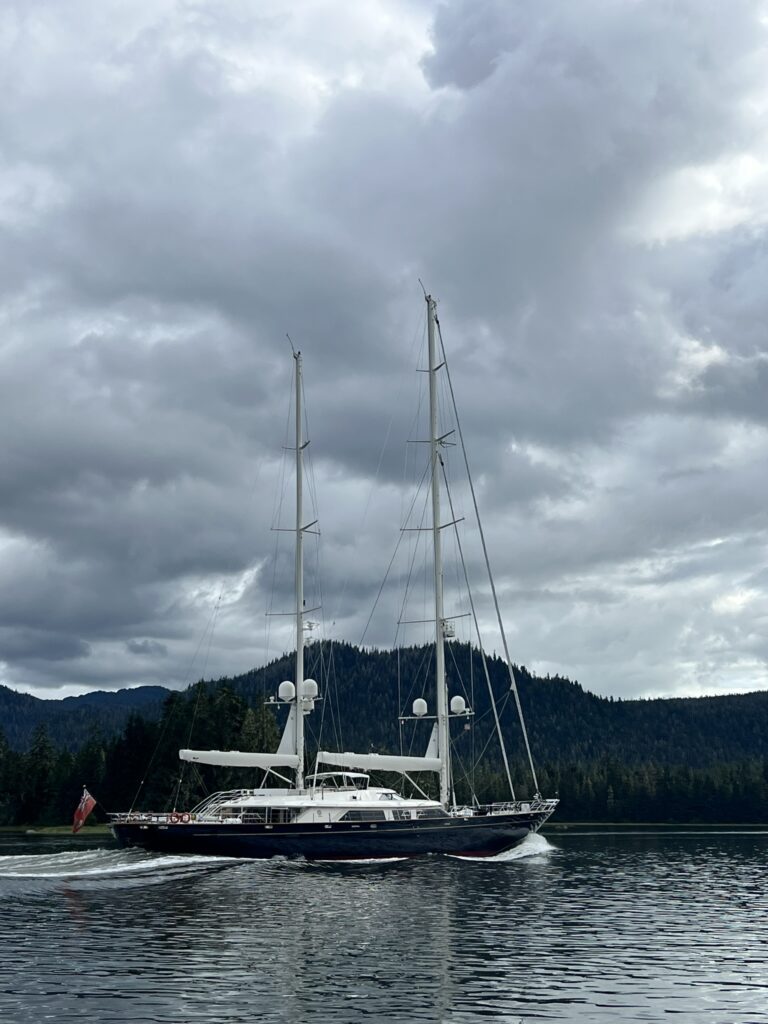
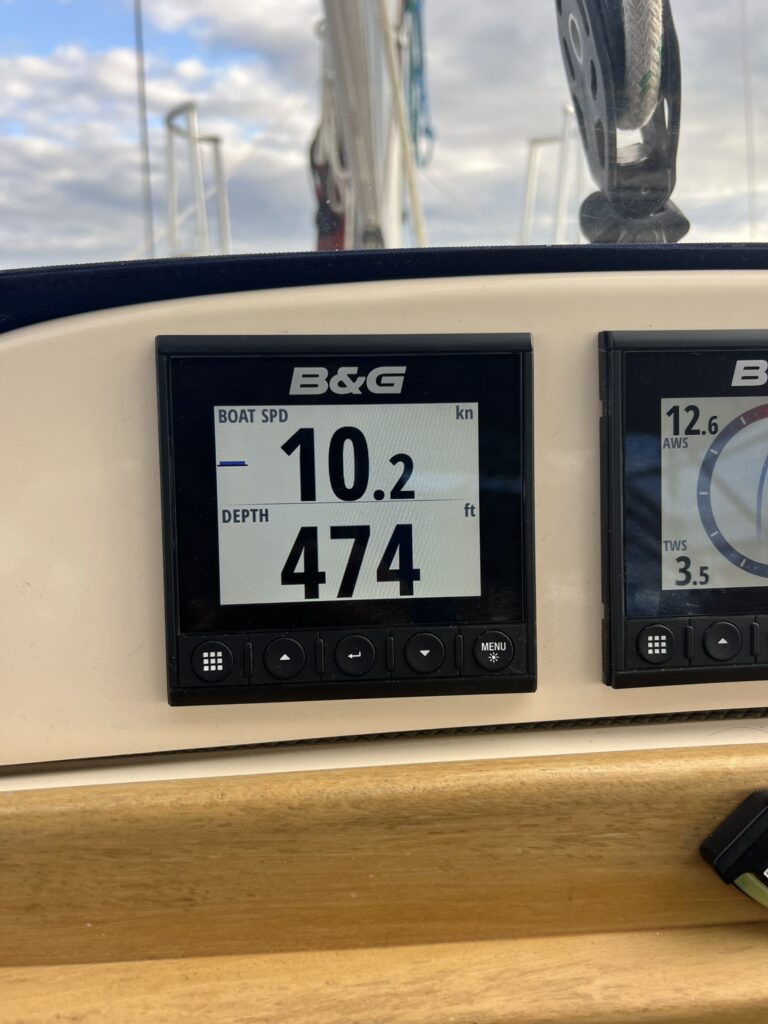
After two nights in Petersburg, we headed south down Wrangell Narrows. This is a 22 mile-long narrow, winding channel that presents several challenges to navigation. It is filled with hazards to navigation, shoals, islets, reefs and commercial traffic and narrows at spots to a few hundred yards across. It is marked with over 60 navigational aids that must be followed closely. In addition, tidal currents can run up to 7 knots and change direction midway through the channel. We woke early to leave the dock when the current was at slack and then headed down the channel. As we neared the point where the current changes, we were too early and had to pull off at Green Point Bight and anchor for a few hours. When we did leave, we had a strong current behind us and started making great time with boat speeds of over 10 knots. We were passed by a beautiful sailing yacht. We later found out it is the 171 foot Perini Navi luxury sailing ketch named Tamsen and owned by the Firestone family. We also shared a very narrow part of the channel with a large tug and barge coming the other way but I was too busy steering to get a good picture of it. Suffice it to say, it was way close.
Our next big destination was Ketchikan, AK. Since it was approximately 135 miles from Petersburg, and we don’t sail at night in this part of the world, we broke it up into three legs. The first leg was from Petersburg, through Wrangell Narrows, to Exchange Cove. This is a calm, well protected anchorage that is accessed through a narrow entrance. It was super calm and we slept well that night. However, when we awoke early to start the next leg, the fog had rolled in and was so thick we couldn’t see the shore which was about 150 yards away. So we waited for it to burn off. Little did we know this fog would become our new routine. We had officially entered the month of Fogust. By noon we were underway to the next anchorage at Meyer’s Chuck. Although we had heard from friends that this was a fun little stop, the dock was full of large motor yachts and the anchorage was quite tight. So we spent the night at anchor and left early the next morning bound for Ketchikan.
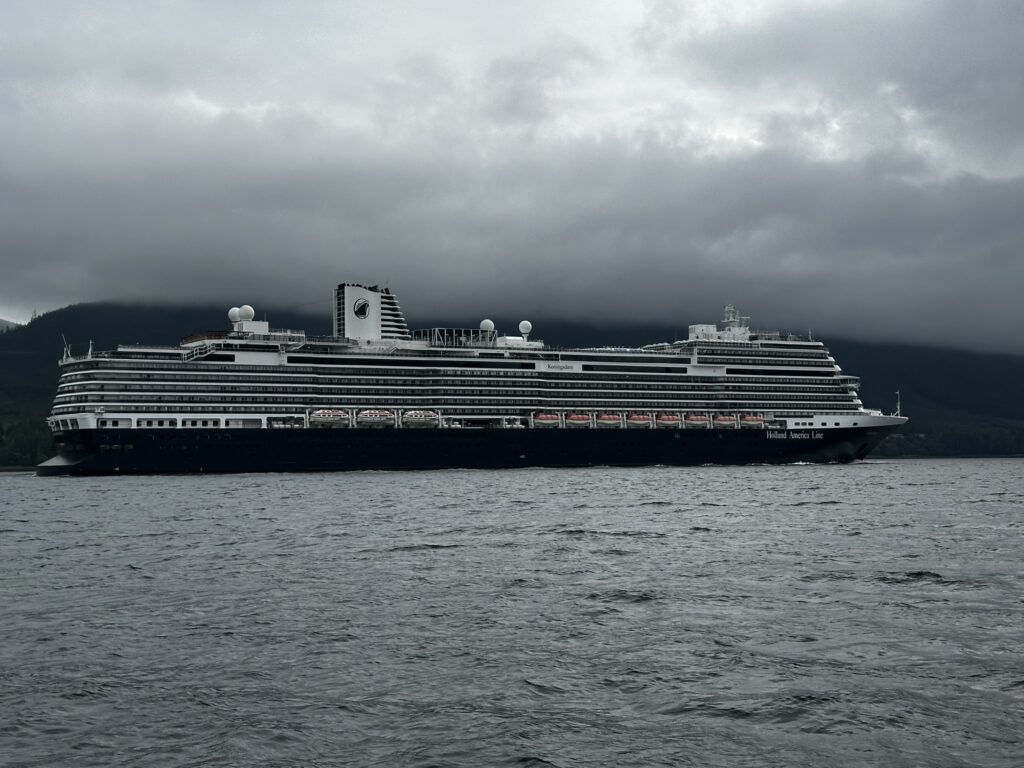
We had stopped in Ketchikan years ago on a commercial Alaskan cruise and were looking forward to exploring it from our own boat, at our own pace. There are several marinas in Ketchikan and we chose to stay at the Thomas Basin Marina which is in downtown, near where the cruise ships tie up. In fact, with about 15 knots of wind on our beam, we had to pass around the front a Holland America ship to enter our marina. This turned out to be a great location. Although somewhat busy during the day when multiple cruise ships are in, the last one leaves around 6:30 pm and the town is quiet after that. There are no amenities at that marina, however, the Ketchikan Yacht Club is in the same location and offers the use of their facilities for a small daily fee. So we had access to showers, laundry, a kitchen, and a place to hang out off the boat. They also have slips for transient boats that we will certainly take advantage of on our way back north. We had fun walking around town. Our highlights were the Salmon Walk (a two mile walk along the river with salmon swimming upstream), the Bawden Street Brewing Co., Baleen Brewing, The Bush Pilot’s Lounge (excellent food and a great view) and the 108 Tap House and Burger Bar (amazing burgers). There are some great hikes in the area but unfortunately we were fighting colds while there and didn’t do any this time around. The bus system is easy to use and made grocery shopping easy.
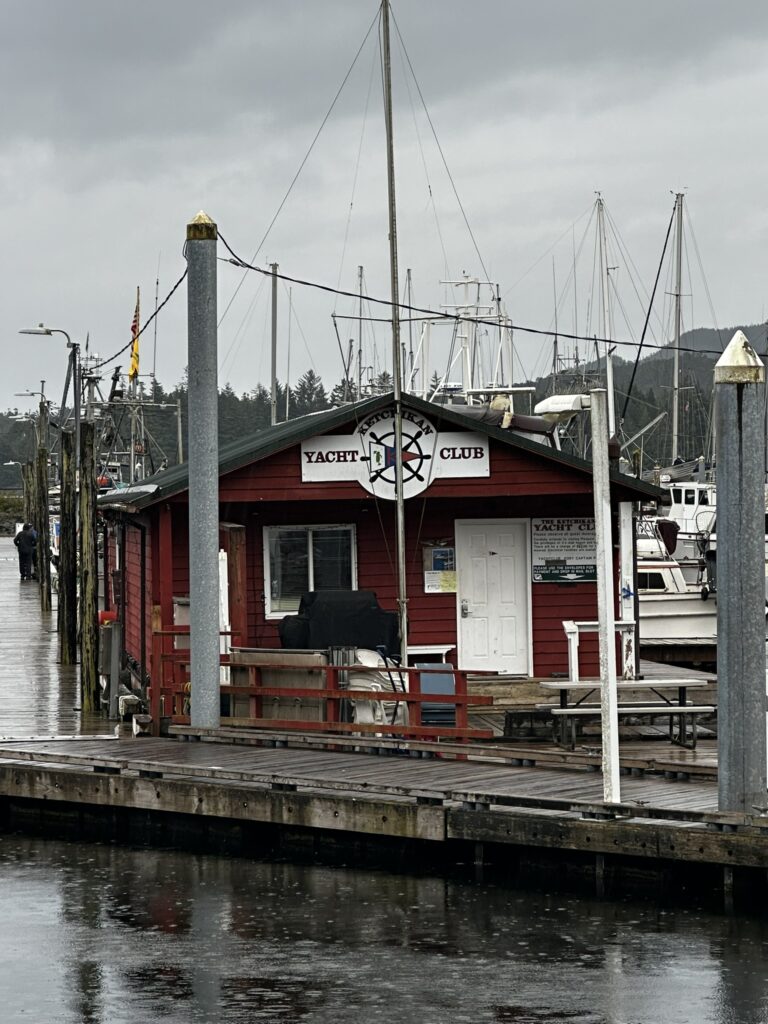
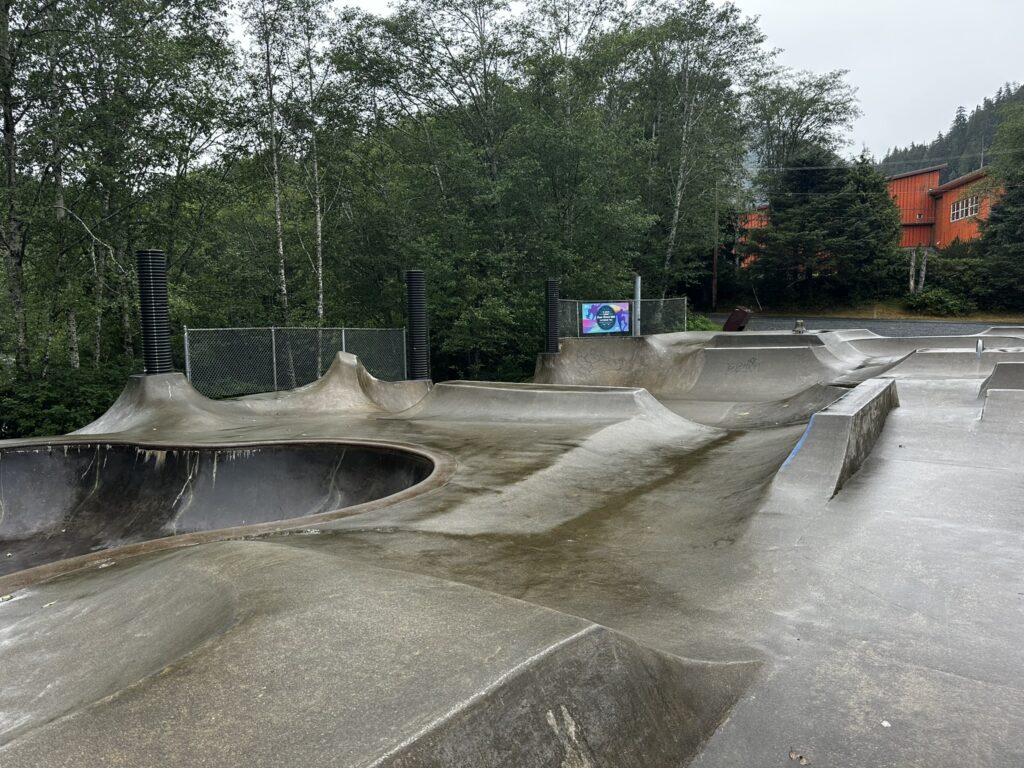
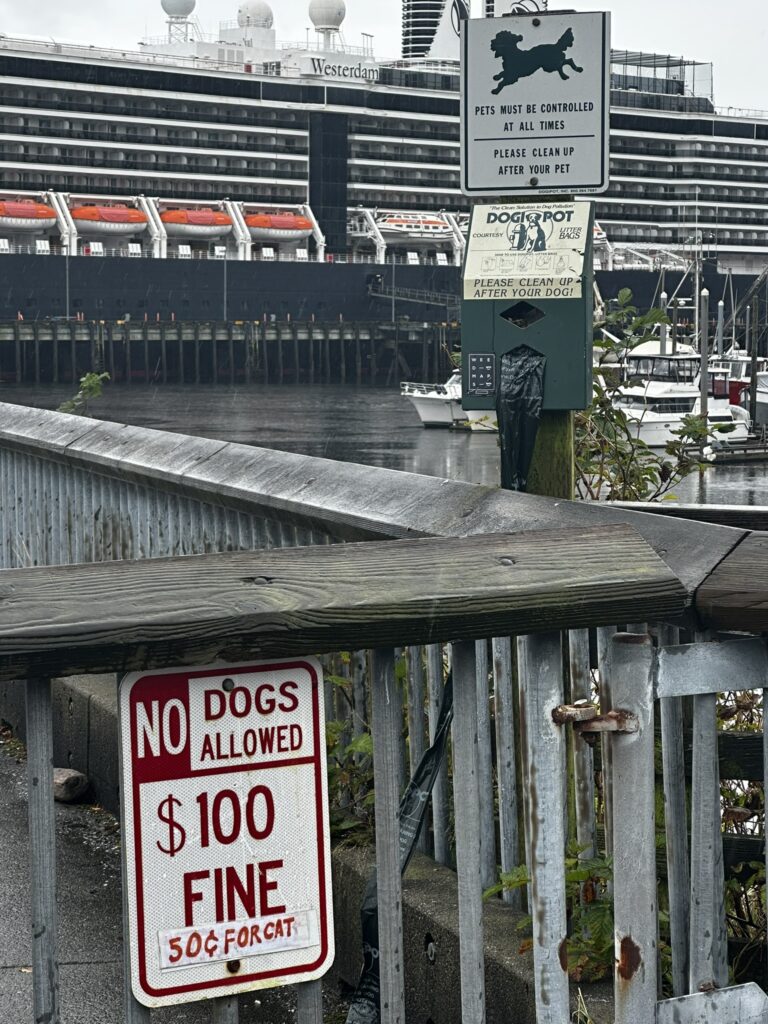
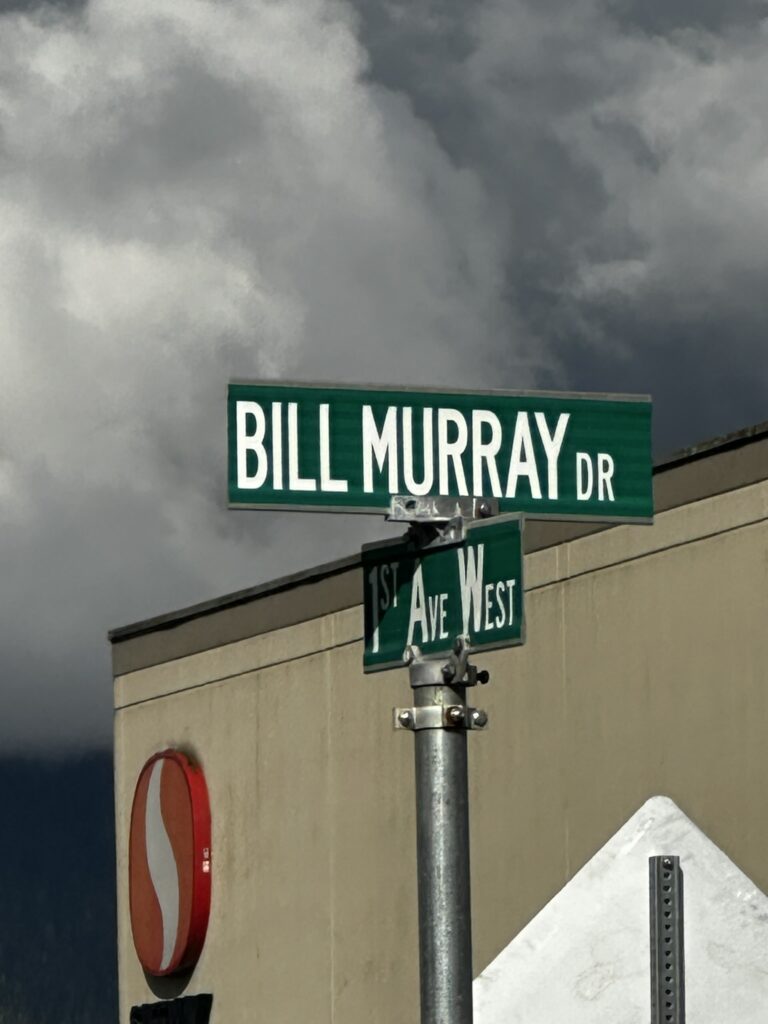
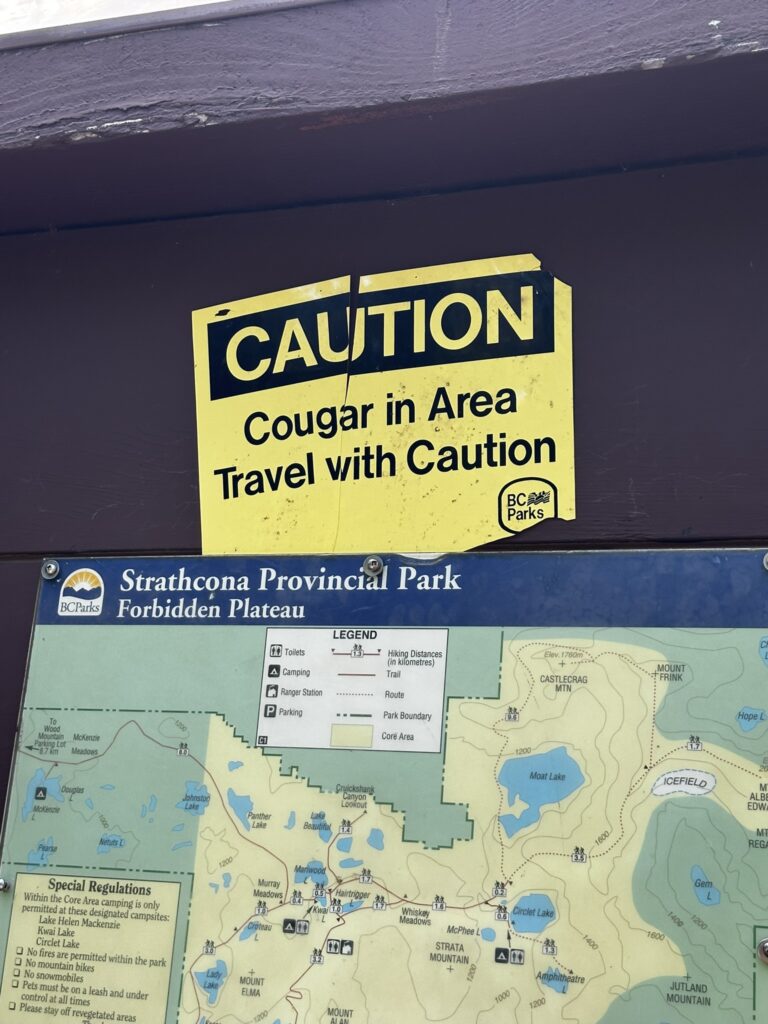
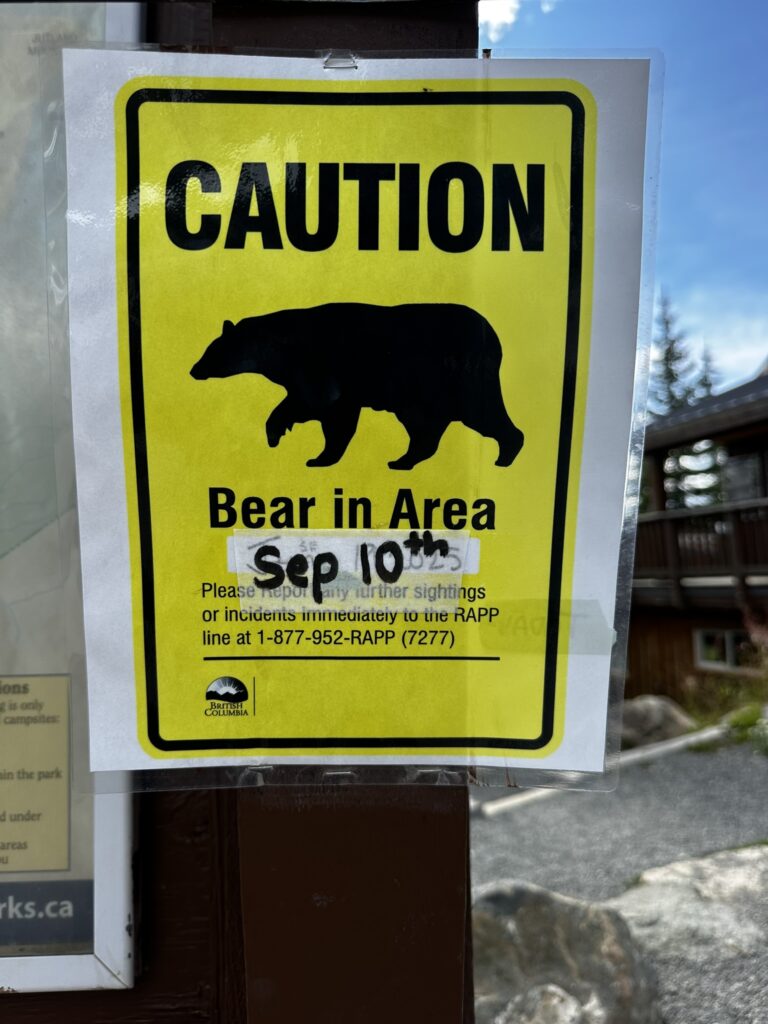
Ketchikan also had some great signs. One of the best, which I did not get a picture of, was on the side of a carpet cleaning van which said “Call me and talk dirty”. Hilarious. Here are some other favorite signs from our trip down.
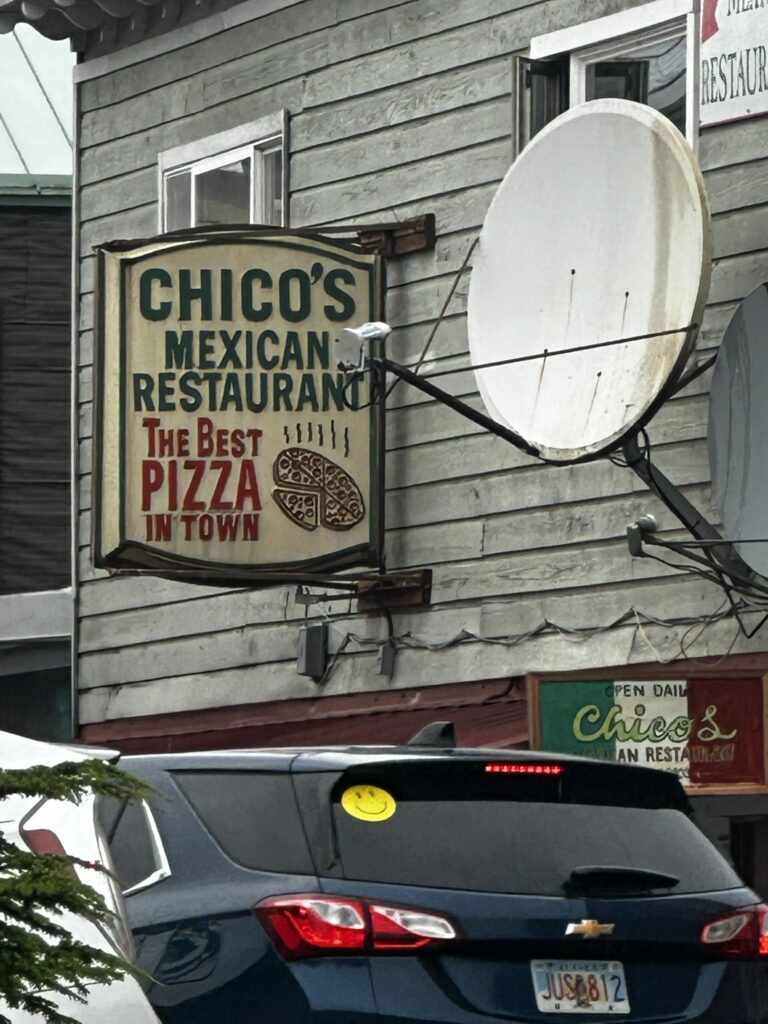

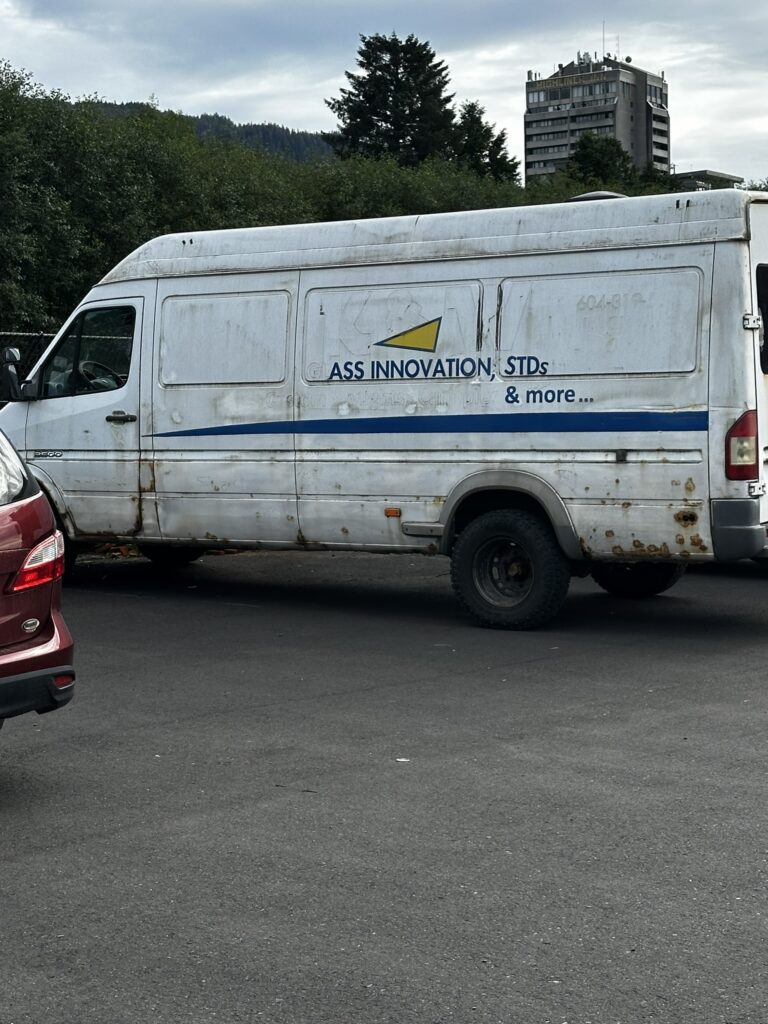
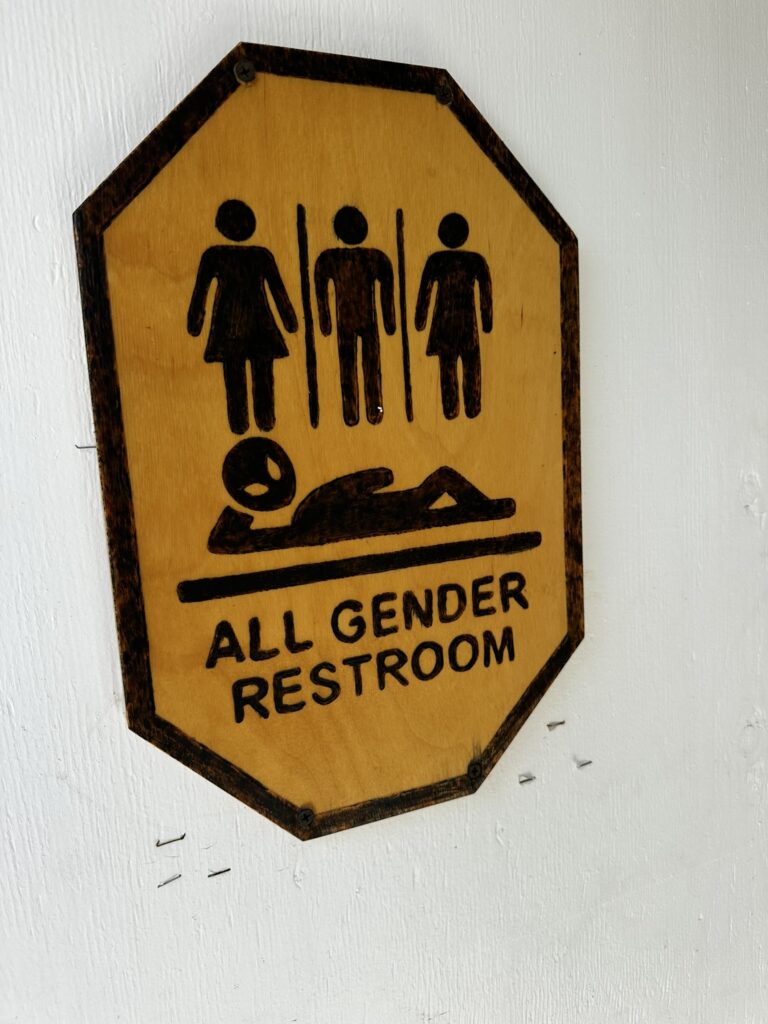
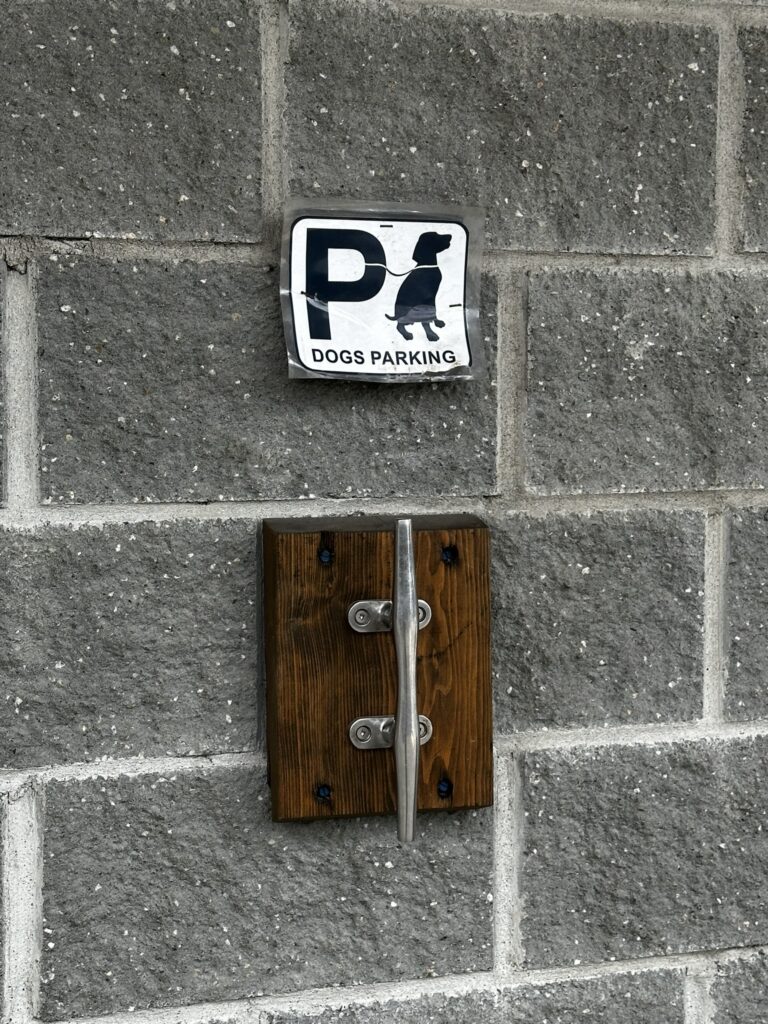

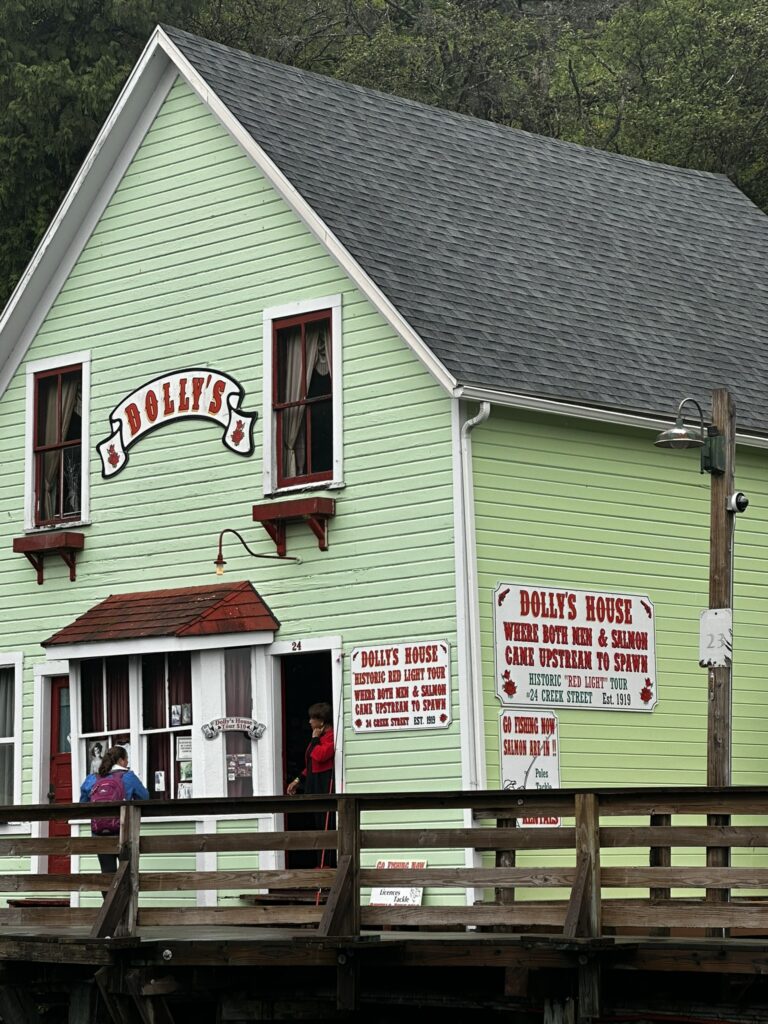
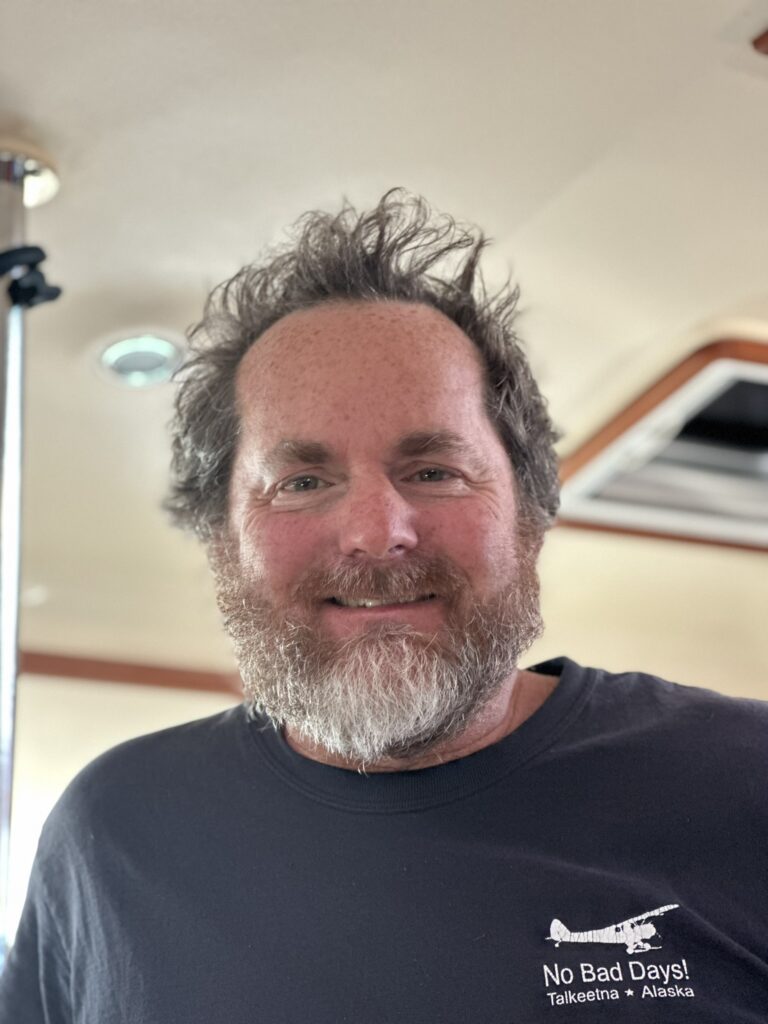
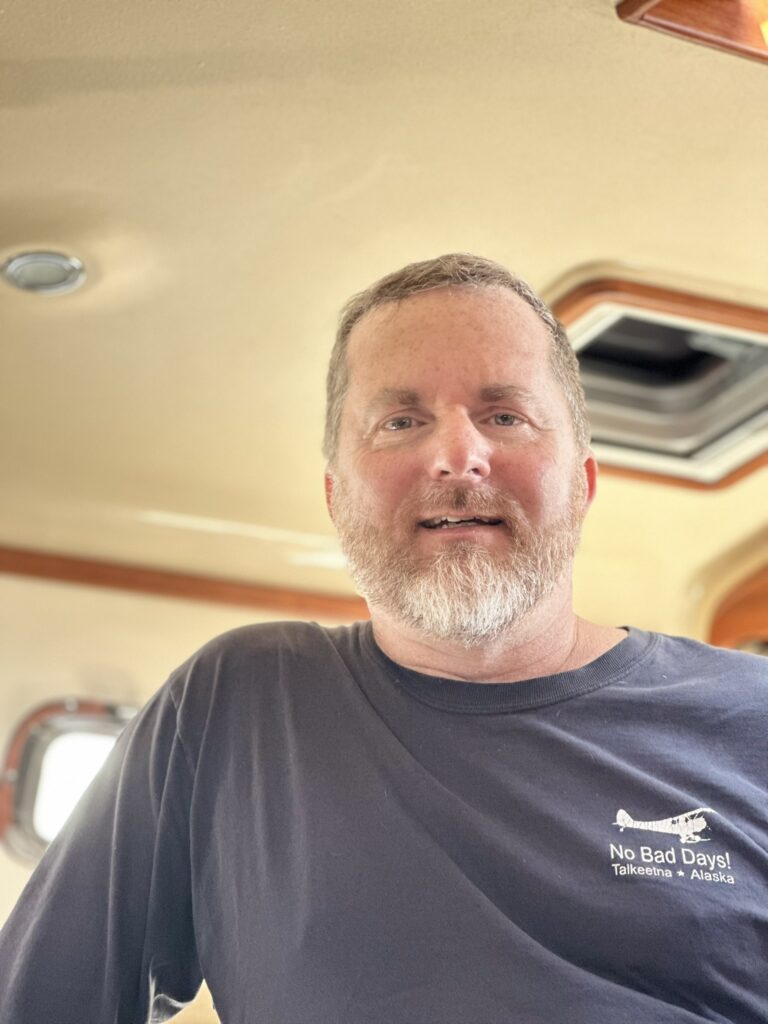
After four days in Ketchikan, we headed south towards Canada. We made it to Foggy Bay just north of the border. This is another very well protected bay with a narrow, shallow entrance. We stayed there for two nights to avoid some heavy southerly wind and enjoyed some time relaxing on the boat. Our next leg took us across the border, through the narrow and winding channel of Venn Passage to the town of Prince Rupert. We got a slip at the Prince Rupert Rowing and Yacht Club which had nice facilities and a great location. Although the entrance to the slip was a bit challenging with tide and wind, there were three helpful dock hands available to help us get tied up safely. Clearing into Canada was a breeze. It involved a phone call to give them our information and we were cleared-in in about 10 minutes. The town was quite fun. I was finally able to get a haircut (the last one was in Hilo, HI). Wheelhouse Brewing has a great location on the water, excellent beer, and tasty pizza. Opa Sushi had amazing sushi in a cool setting. Both are highly recommended. Although we didn’t get fuel in Prince Rupert, we were able to get a propane fill at a place about half a mile north of the marina.
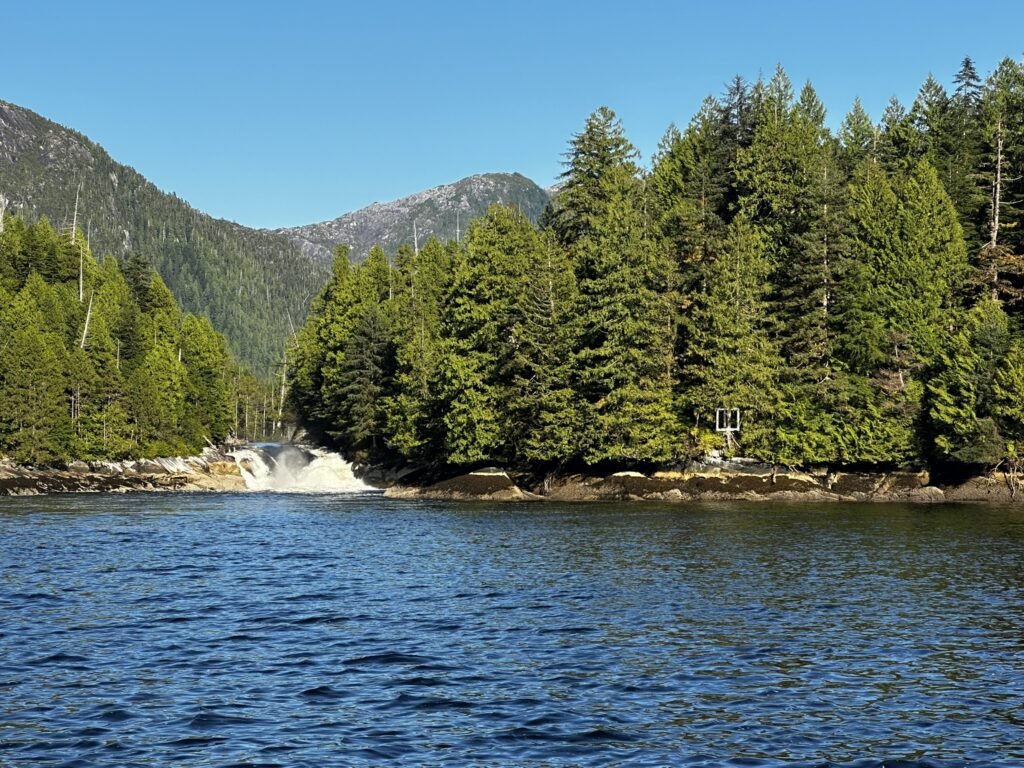
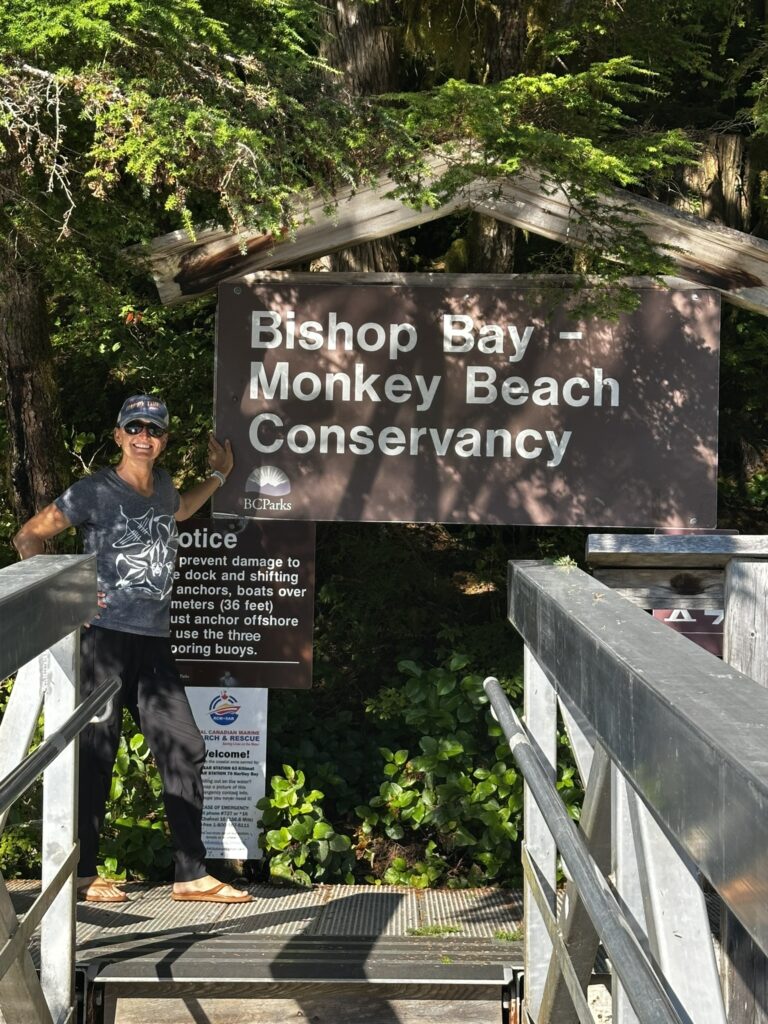
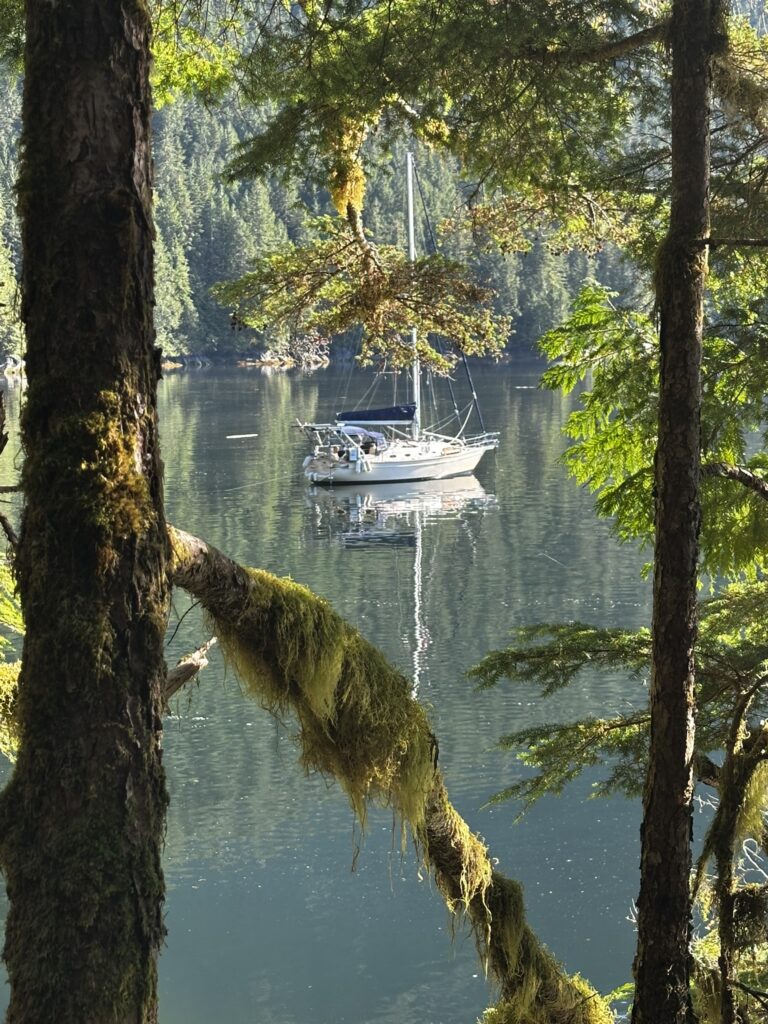
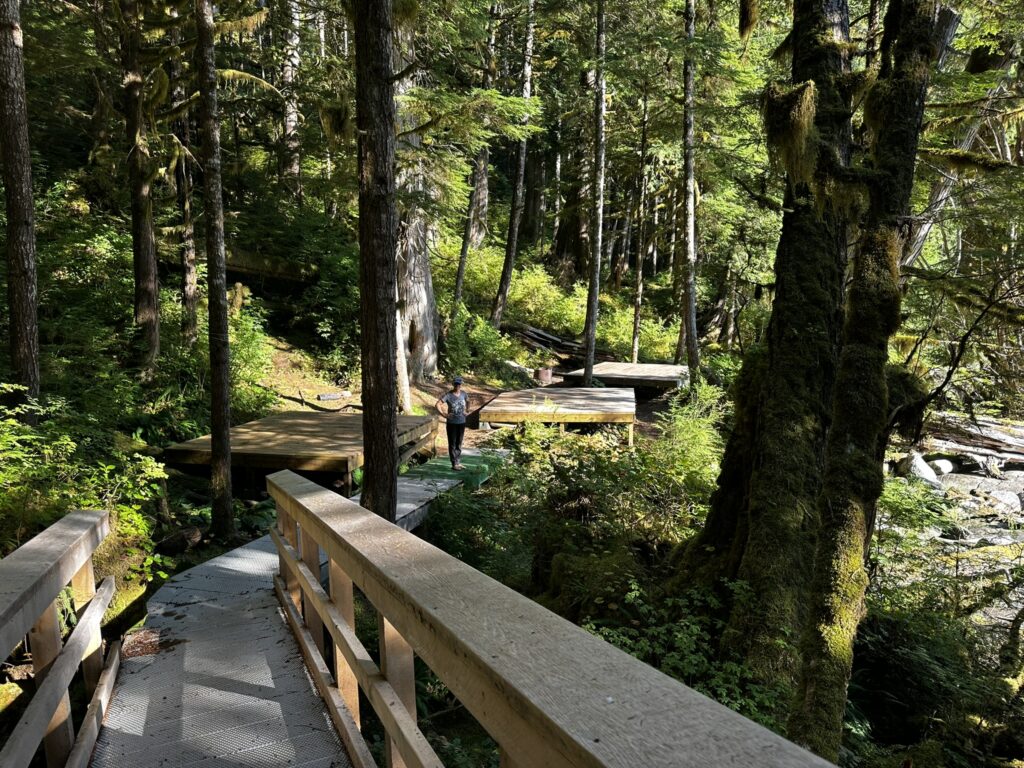
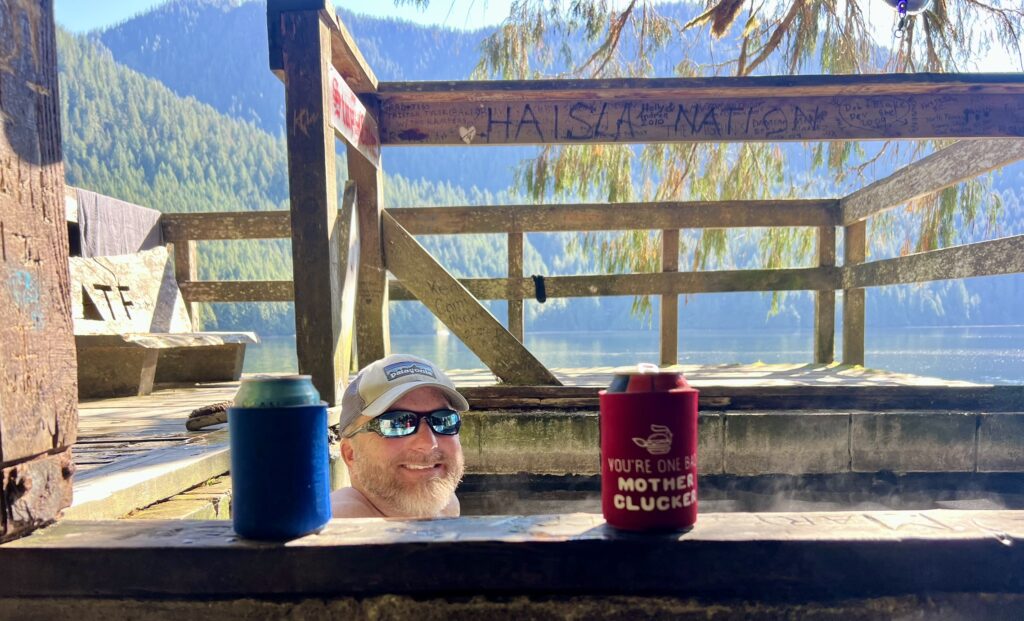
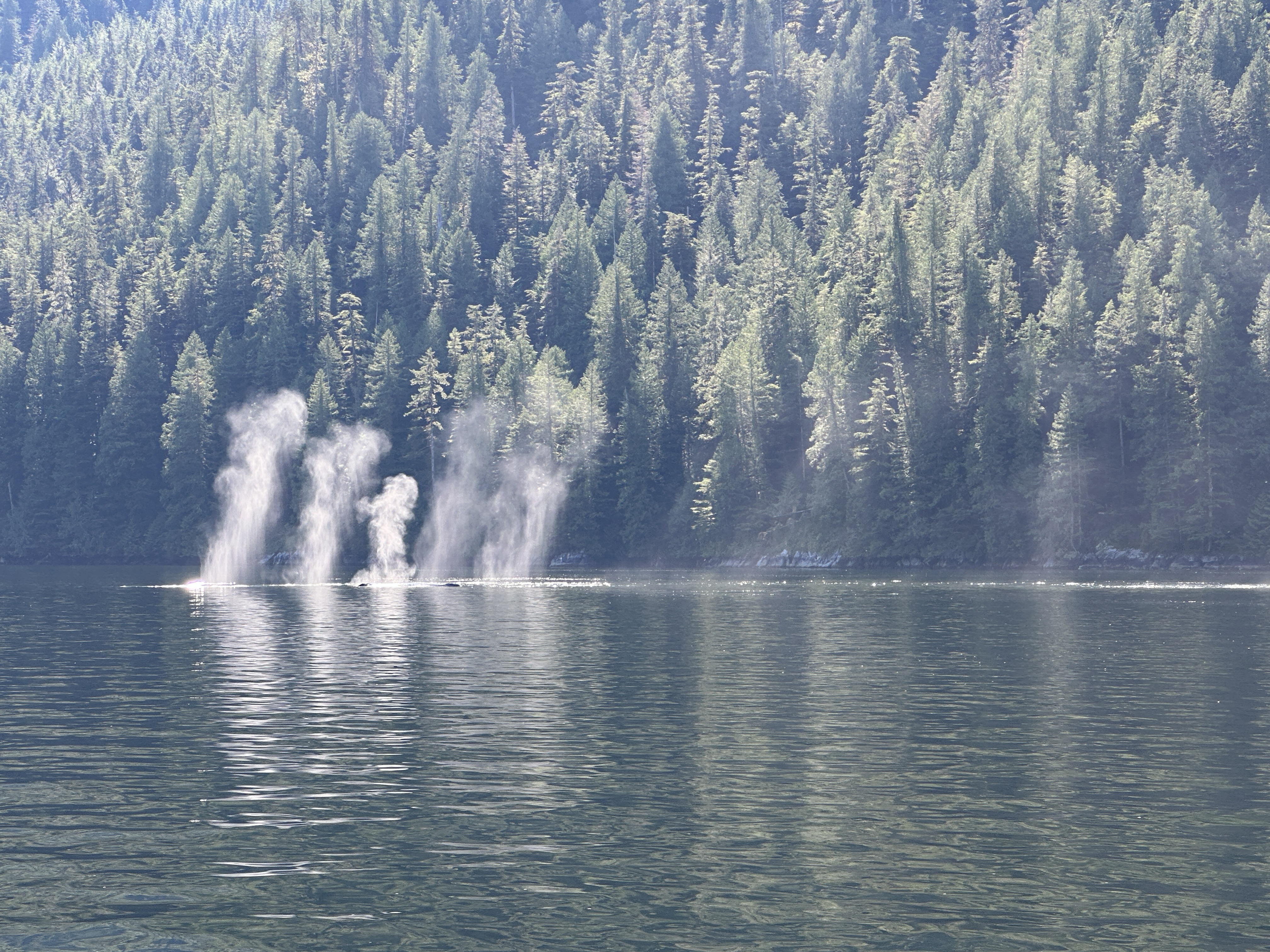
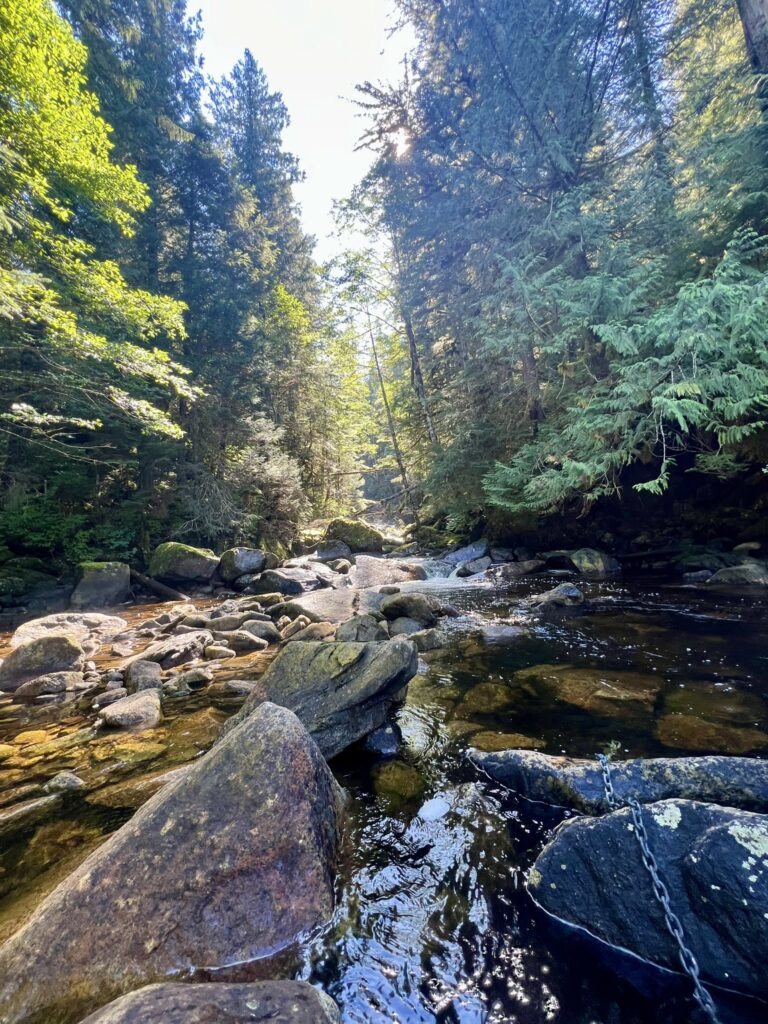
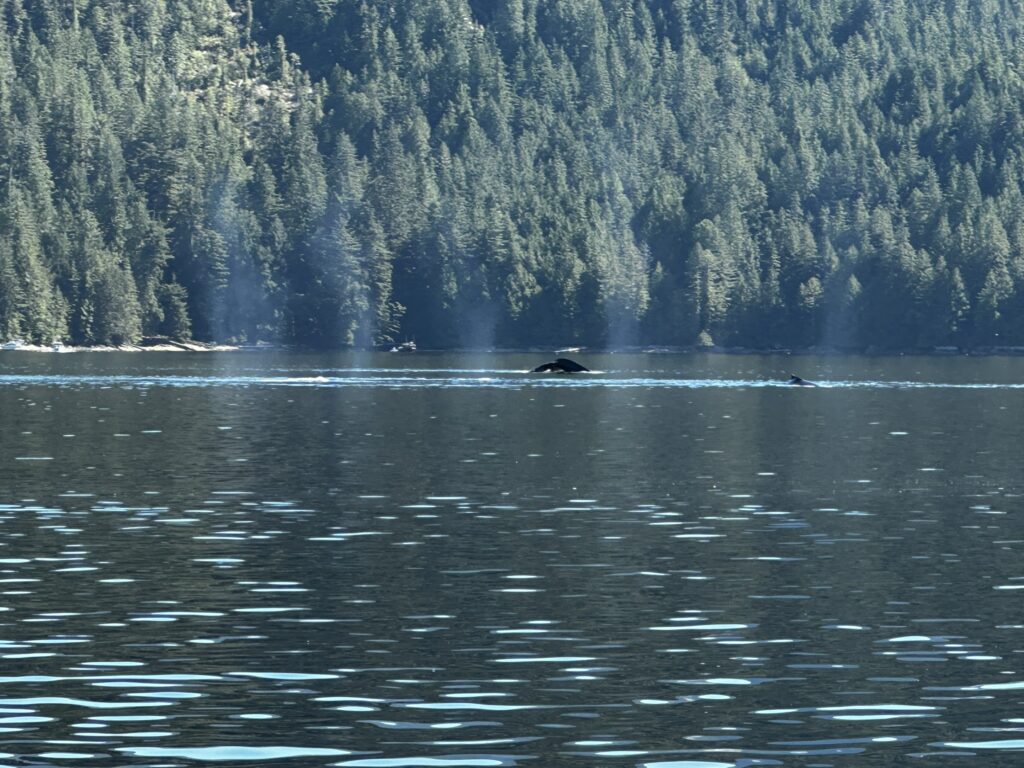
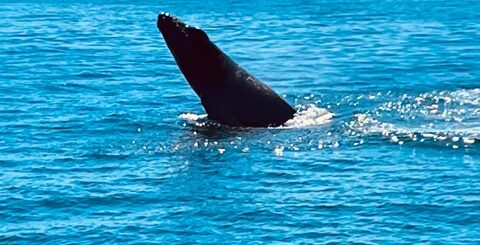
After a few nights in Prince Rupert we again pointed the bow south. Passing some big ships as we left the city, we entered the Grenville Channel, another narrow passage with strong currents. We stopped overnight at Verney Falls in Lowe Inlet. This was a fairly large but protected bay with a waterfall at the head of the bay. We were greeted by a black bear on shore as we anchored. The next day we completed the passage through Grenville Channel and headed north to Bishop Bay Hot Springs. This place was A-Ma-Zing! Not only was there a hot spring with a cement pool covered with memorabilia left by visiting boats everywhere, but there was a crazy whale show every day. We stayed for an extra day because it was so good. There were several groups of humpback whales that would breach and then hit the water so hard it sounded like a gunshot echoing off the surrounding cliffs.
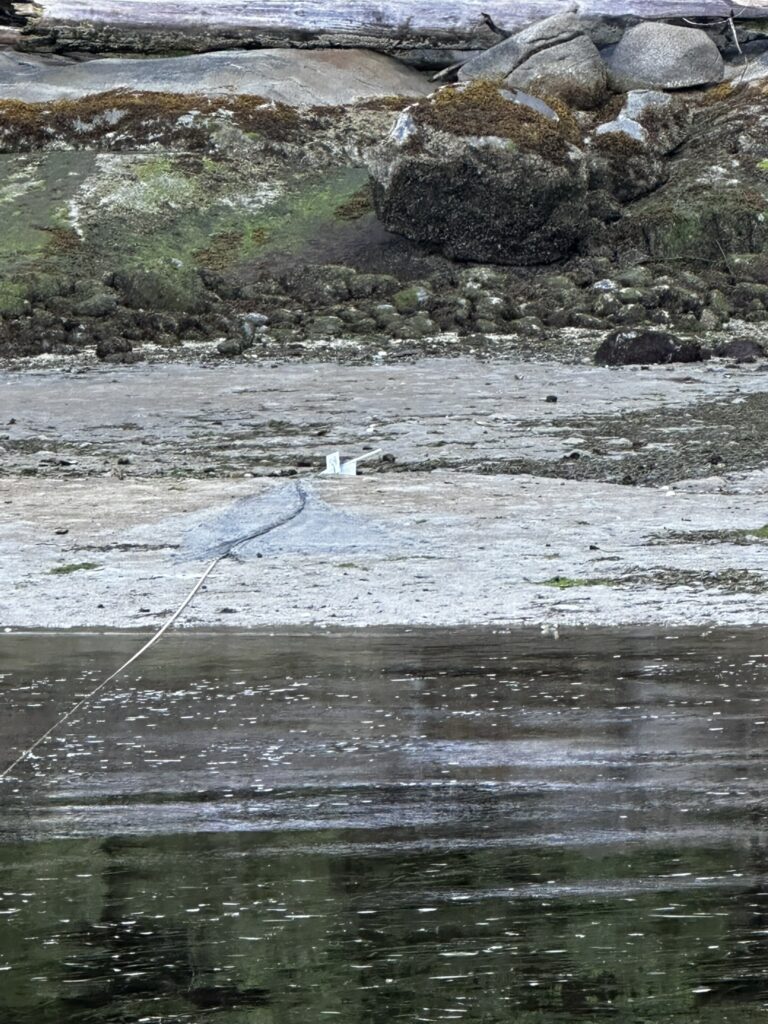
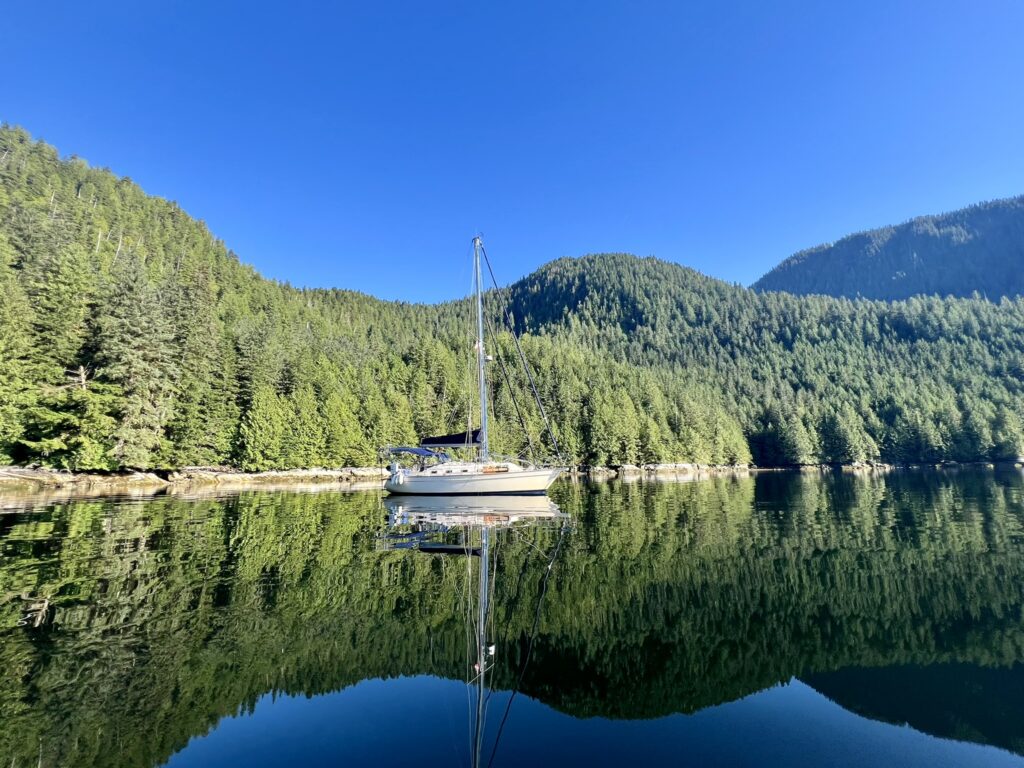
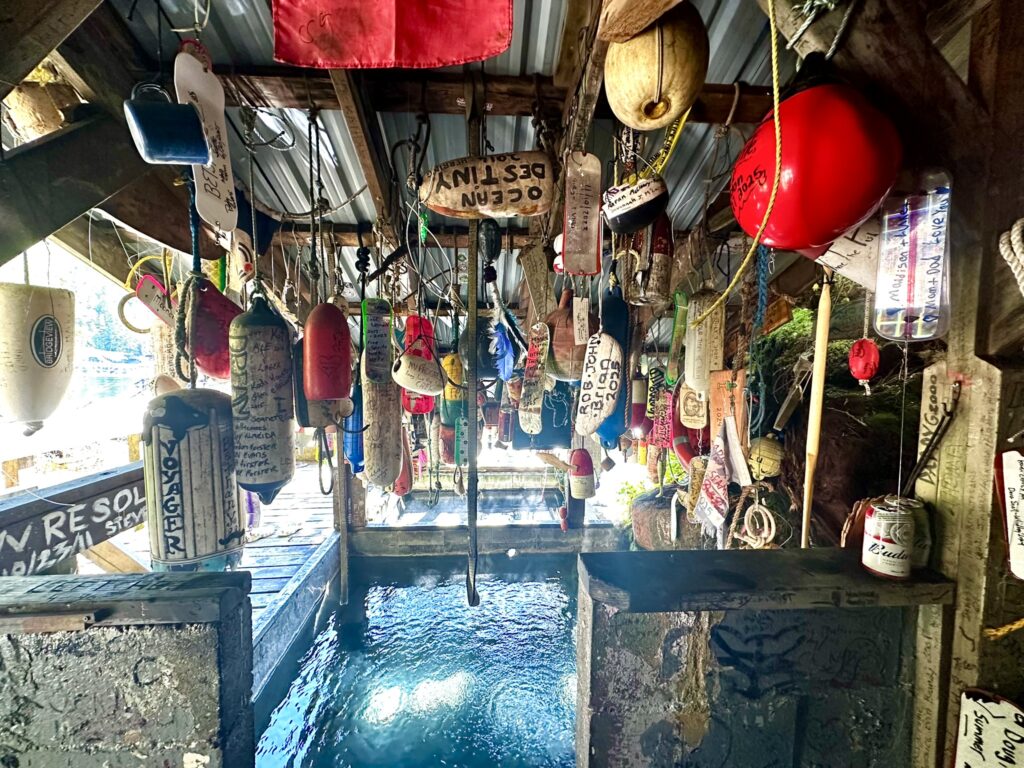
As much as we wanted to stay, we had to continue south. We left and encountered the now ubiquitous thick fog. Fortunately we have radar which makes navigating the fog possible. Although when it’s very thick we have to watch out closely for all the things that are trying to sink us in the Pacific Northwest. This is why we don’t sail at night. Here are some pictures of just a few of the things trying to sink or kill us here:
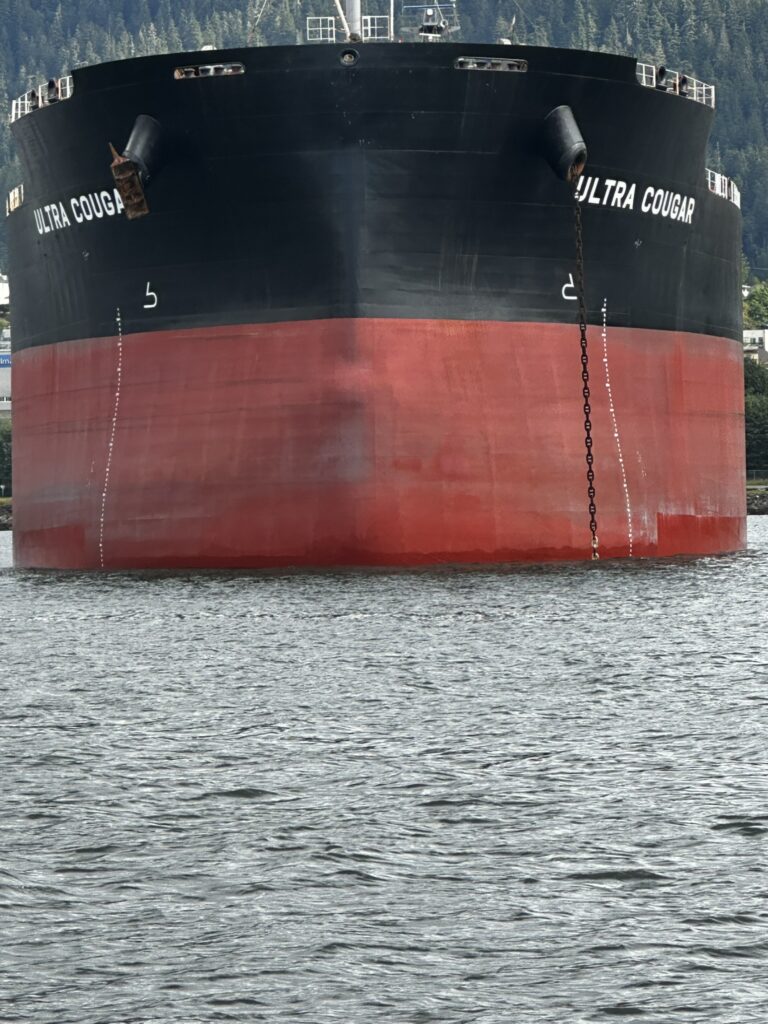
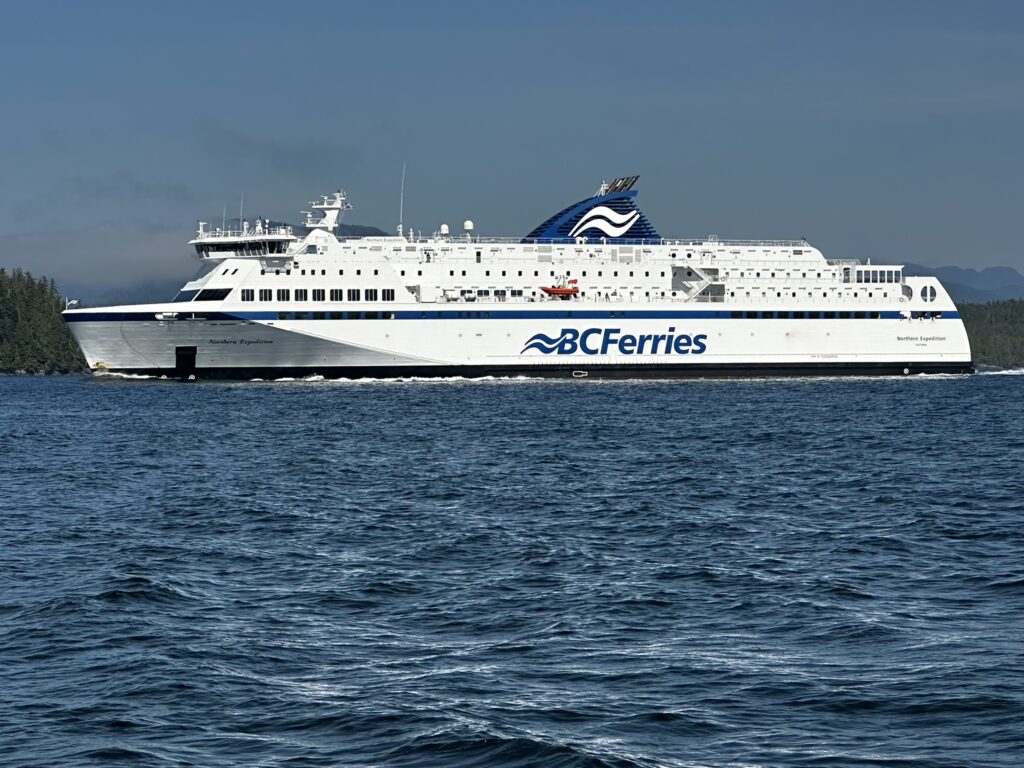
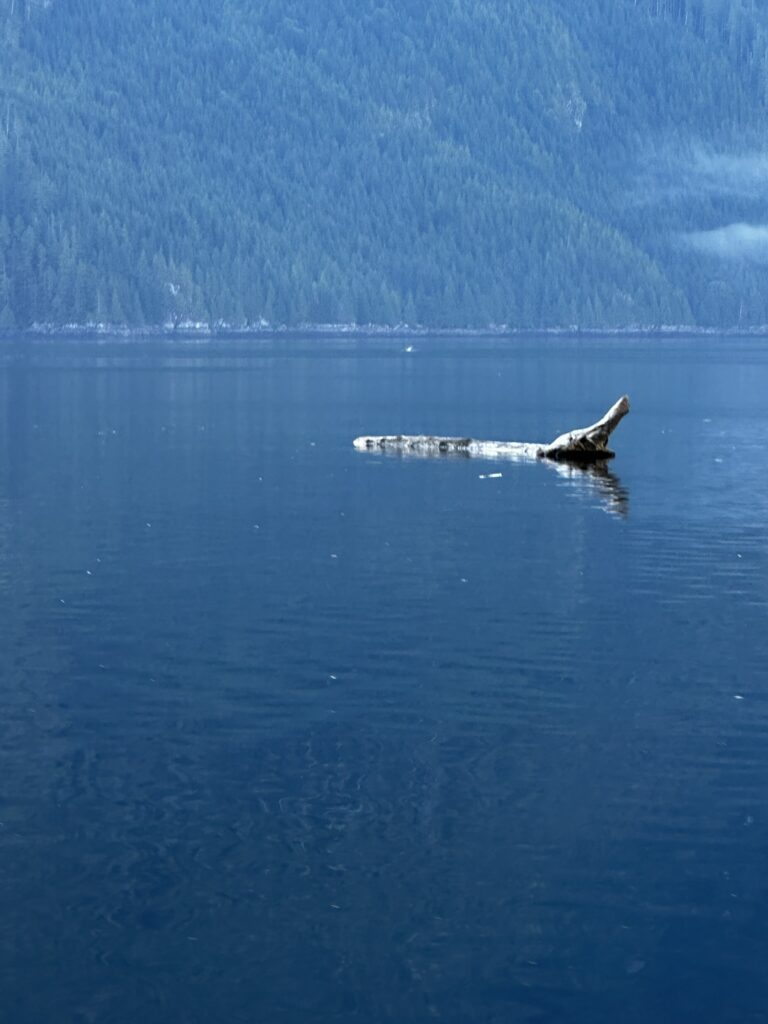
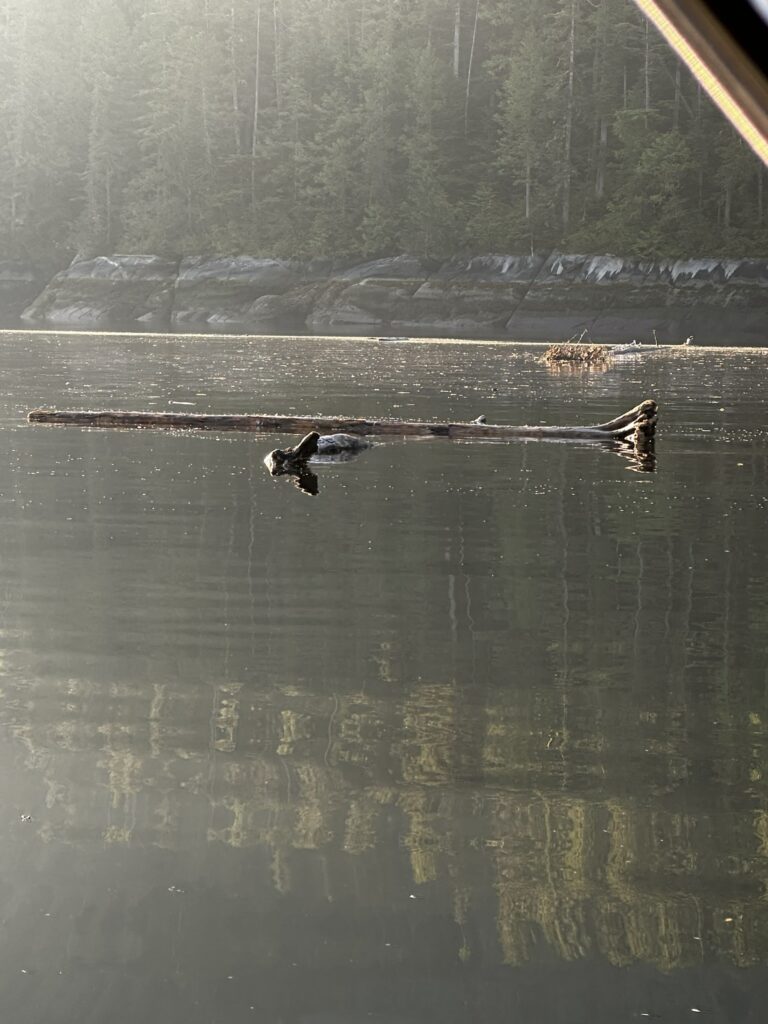
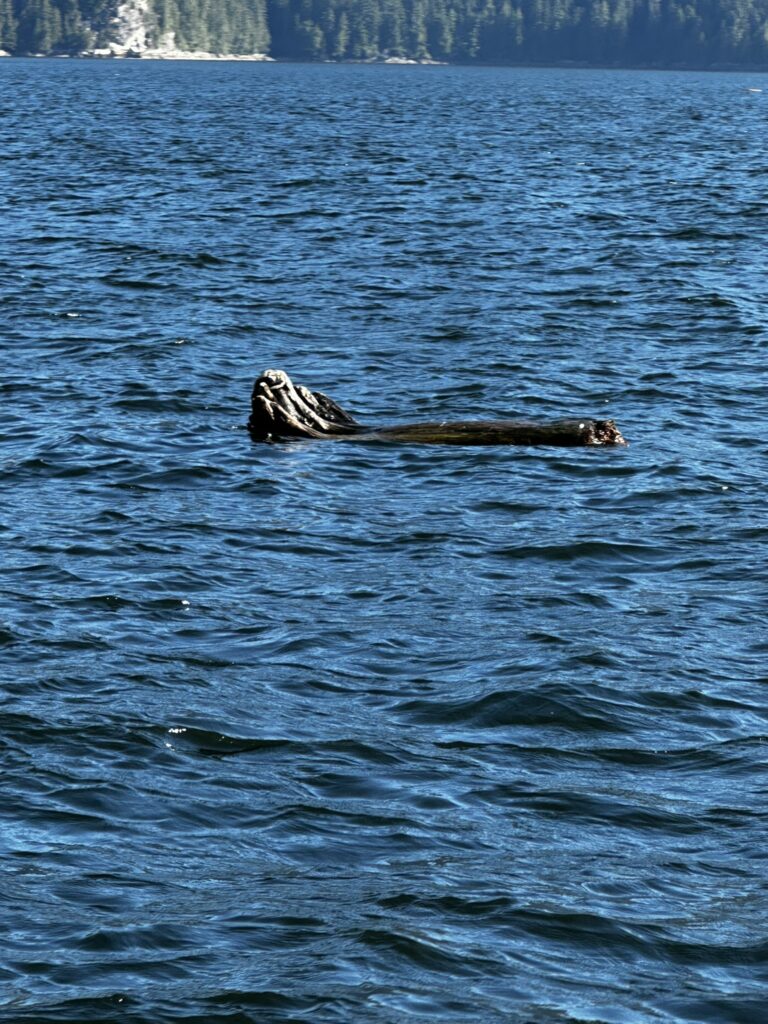
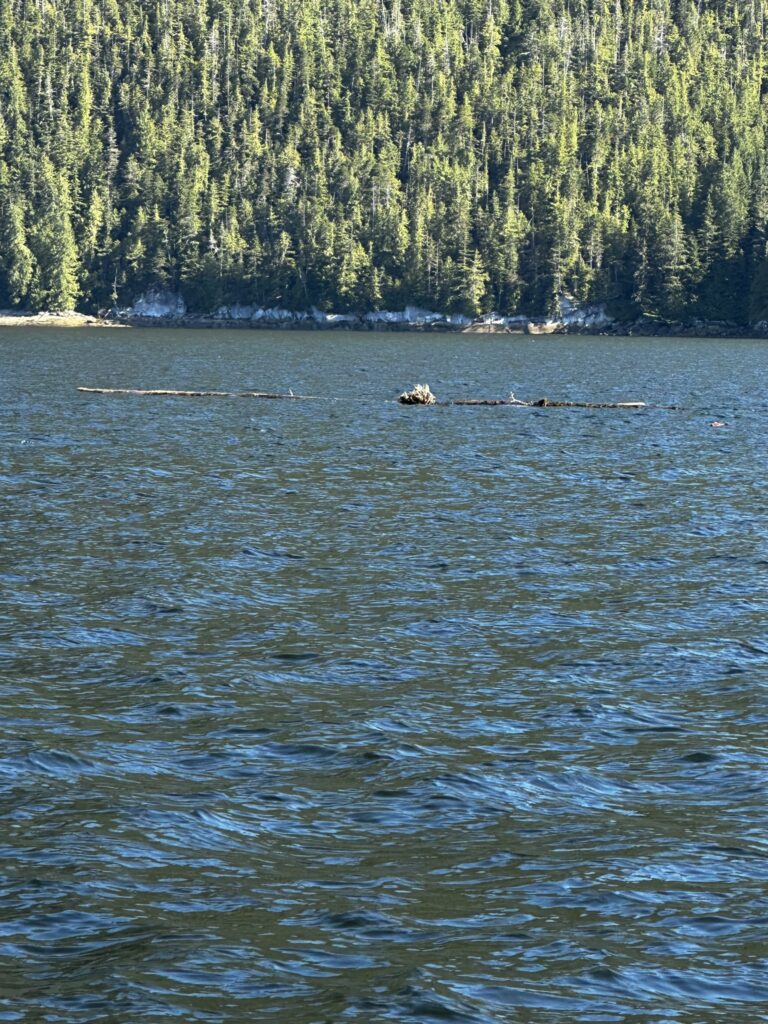
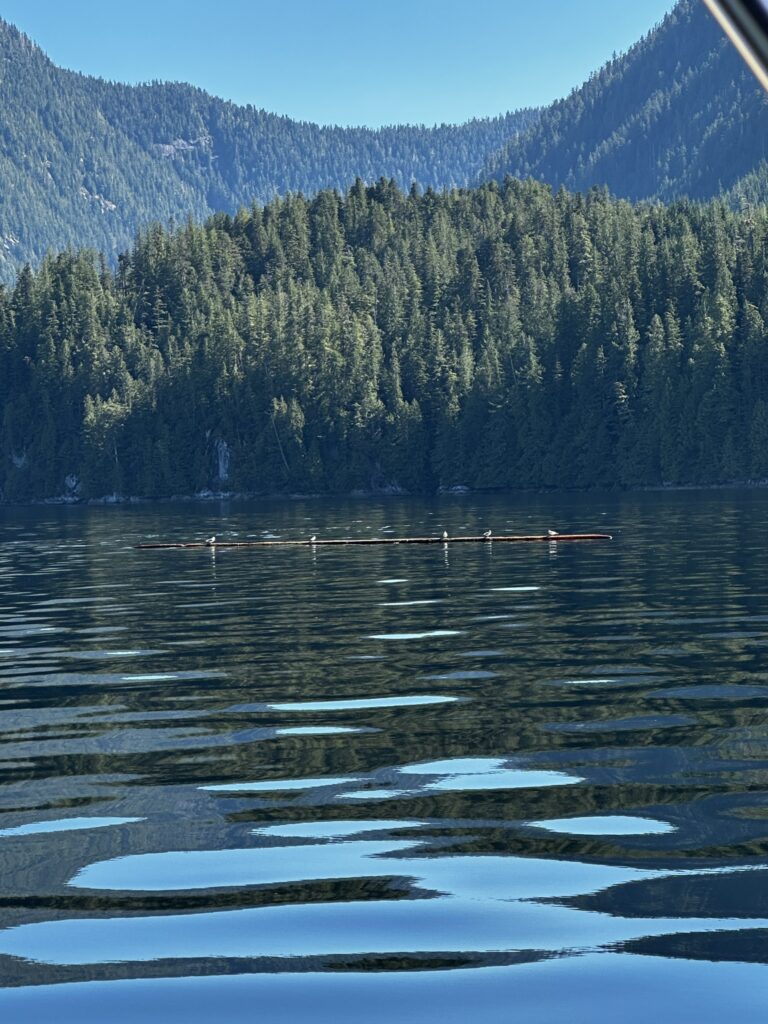
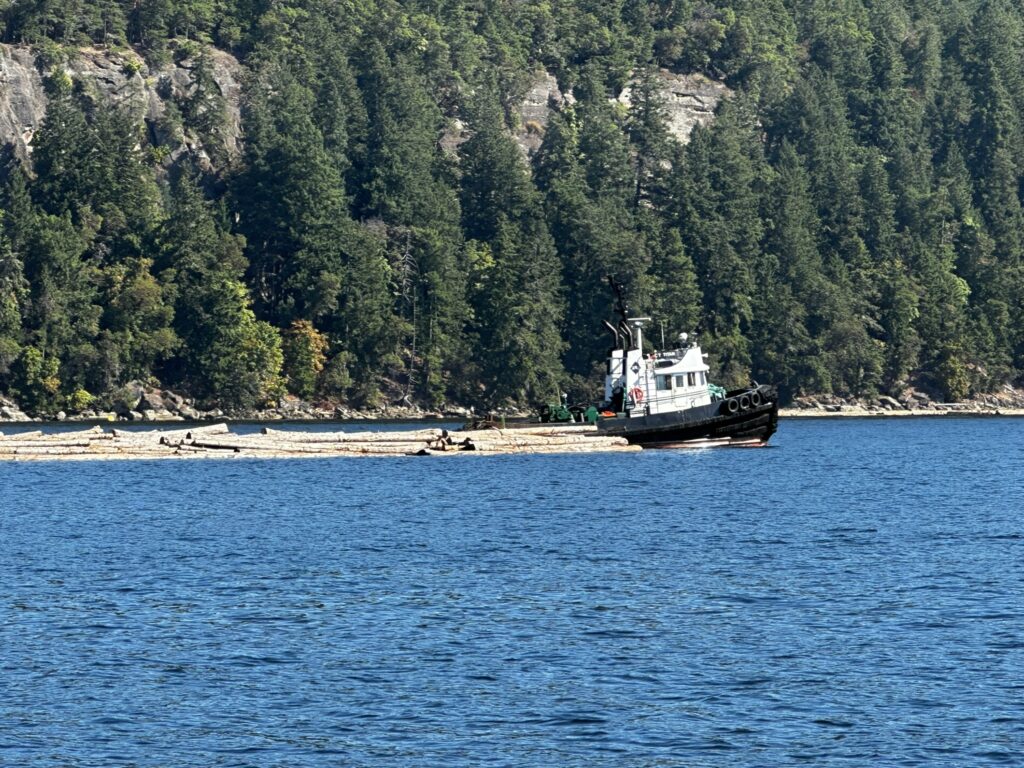
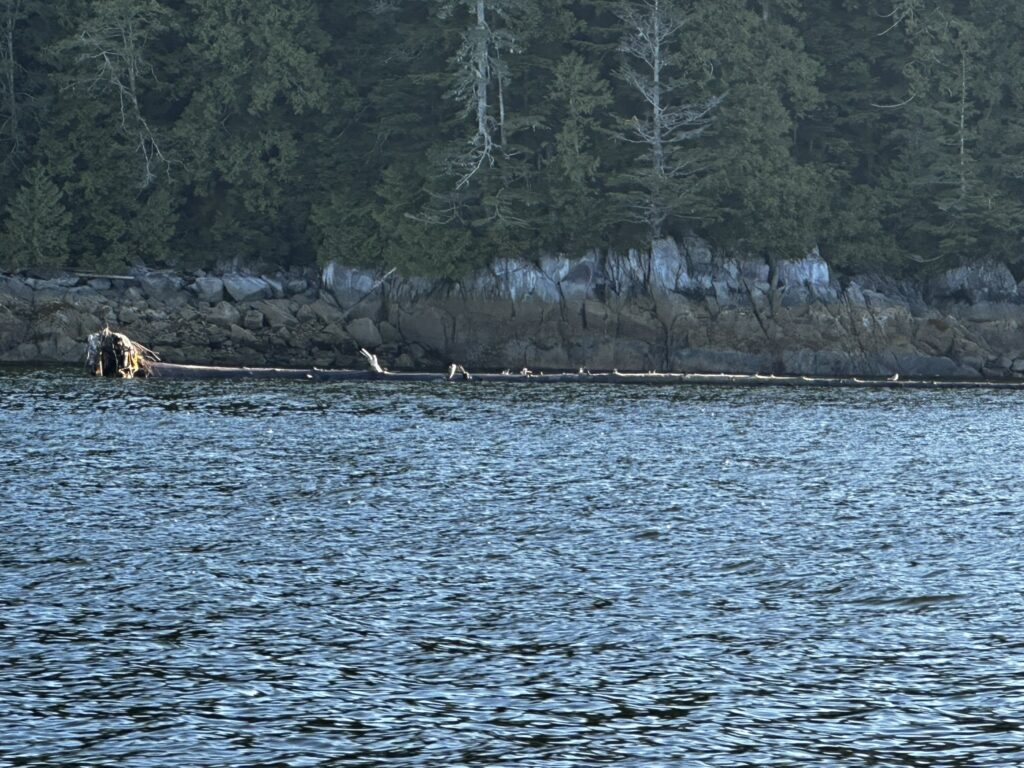
The ships luckily show up on radar. The logs, not so much. Next time you see us, ask Shelly what it sounds like when I hit a log I can’t see.
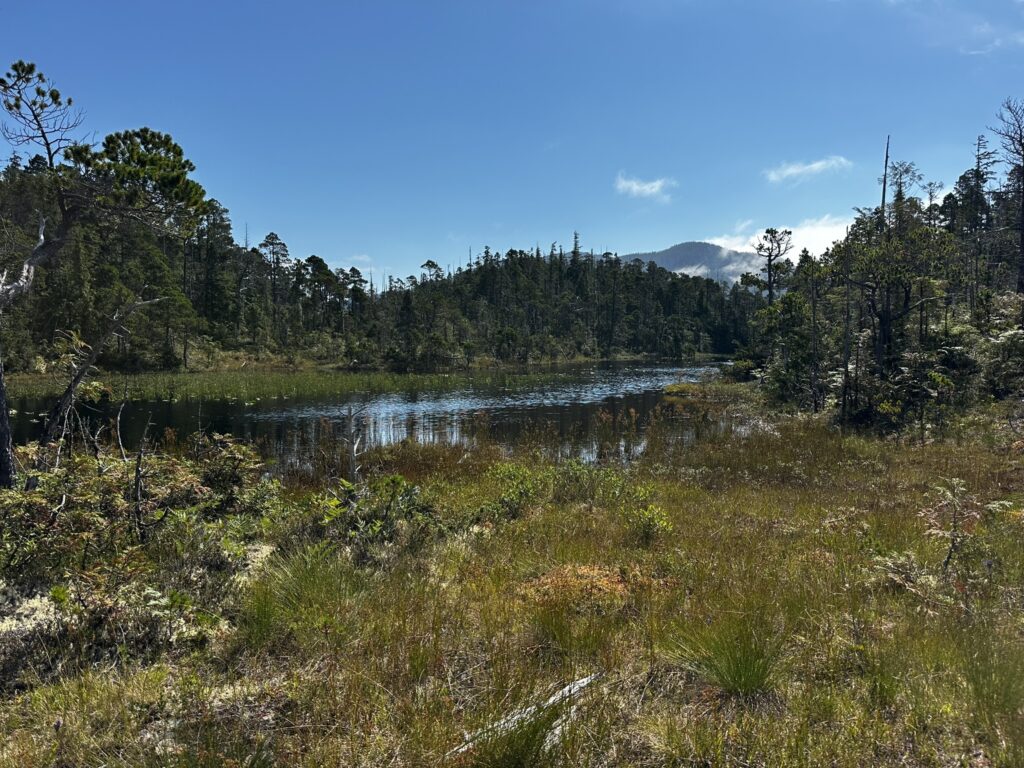
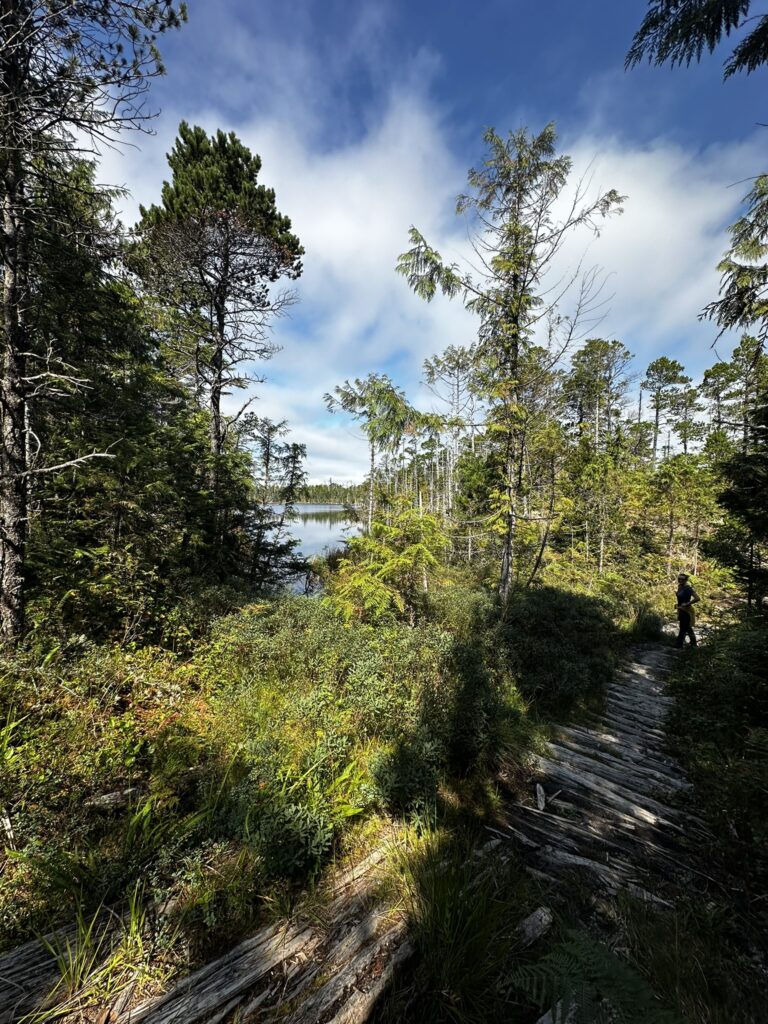
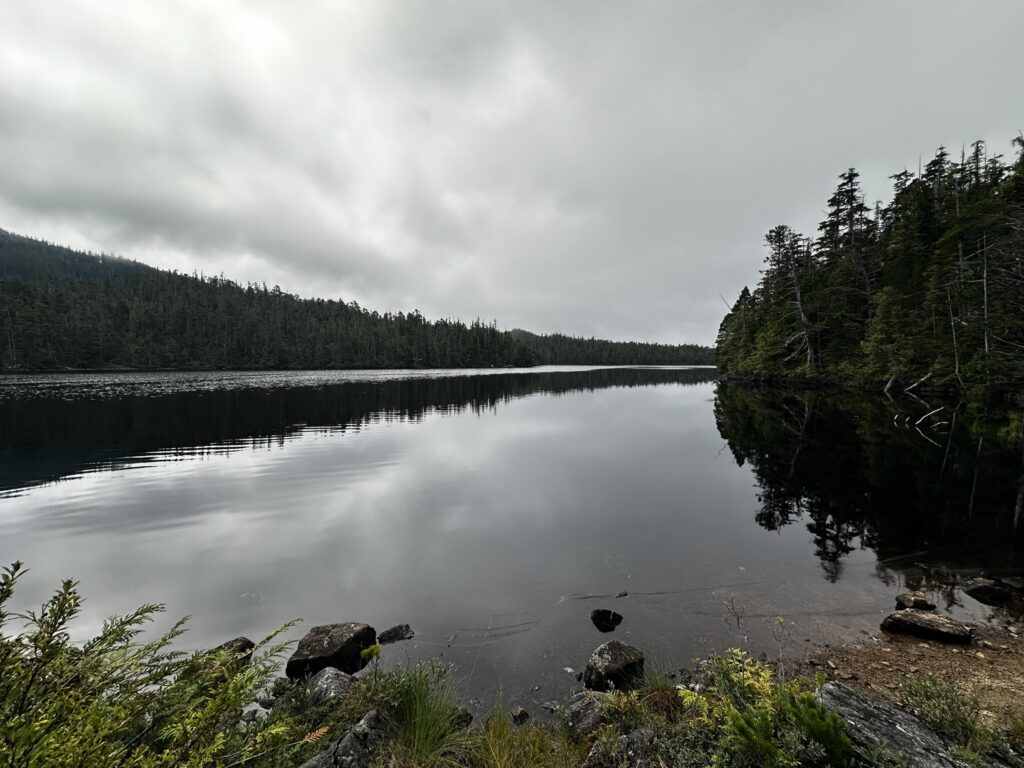
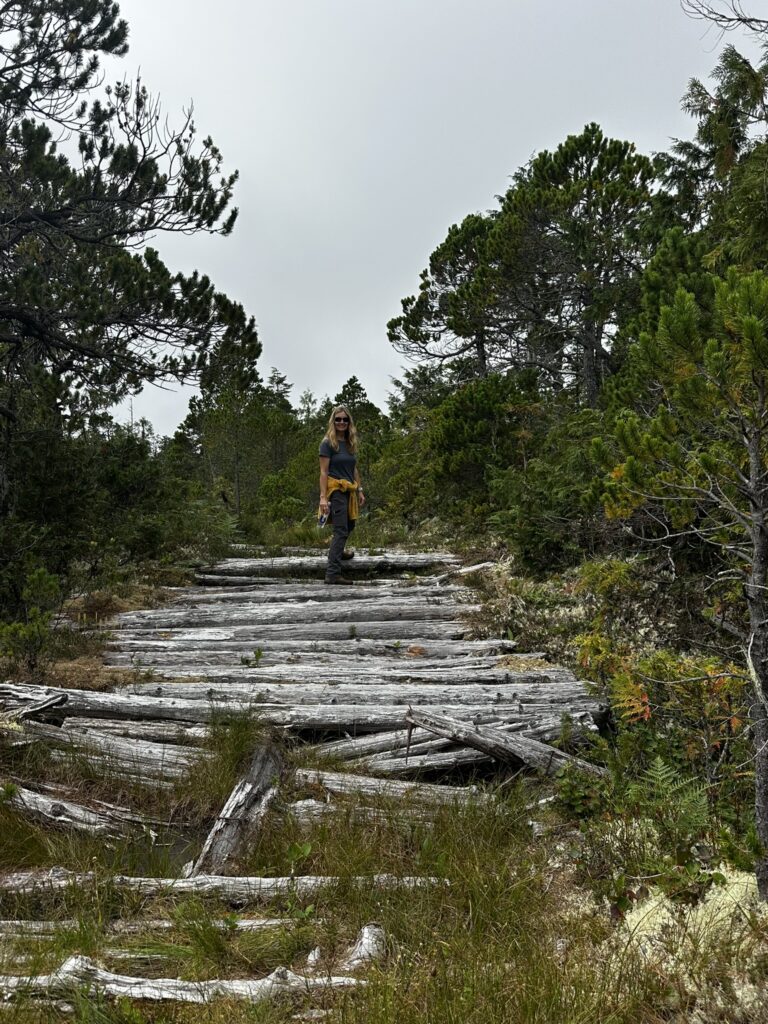
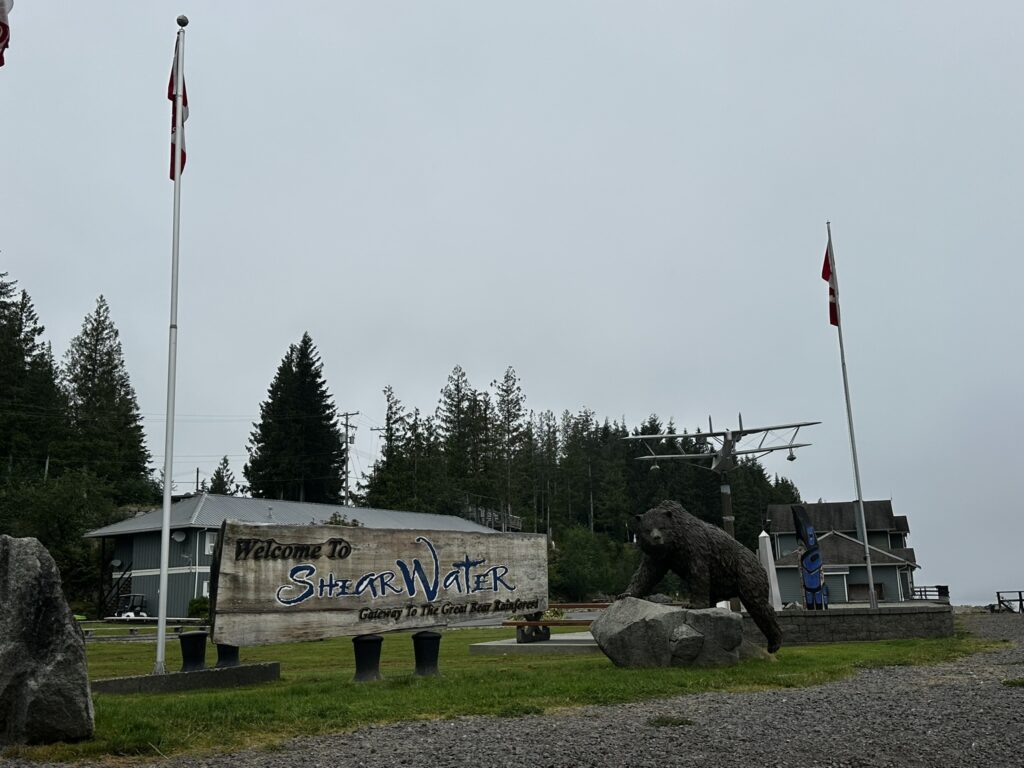
The fog held up until about 2 pm that day but fortunately cleared before we got to our next anchorage in Bottleneck Cove. This is a well protected anchorage with a very narrow, shallow entrance. Once inside it was flat calm. We awoke to thick fog the next day but chose to continue on to the small village of Shearwater. This is a First Nations community with a small resort and marina. It was very pleasant with a well stocked store, nice facilities, and a great restaurant. I highly recommend the seafood chowder and the Caesar salad. No joke, they were amazing. There was also a great hike near the marina to Eddie Lake. We took the ferry over to Bella Bella, a nearby town, but there wasn’t much going on there. We’ll skip it next time.
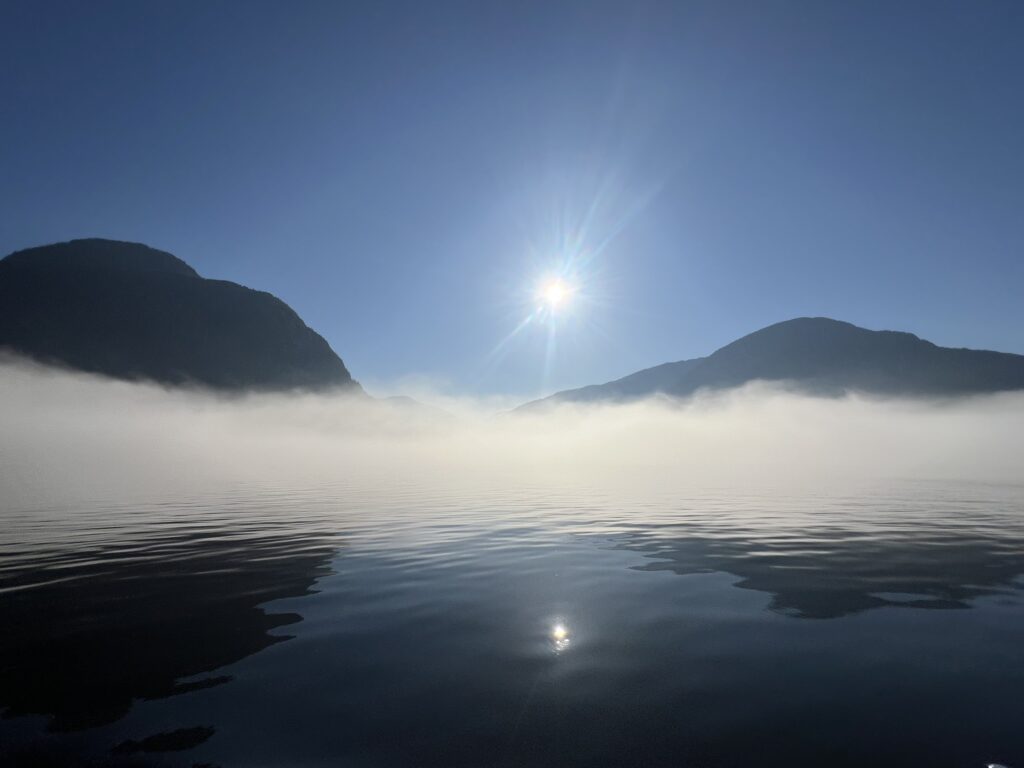
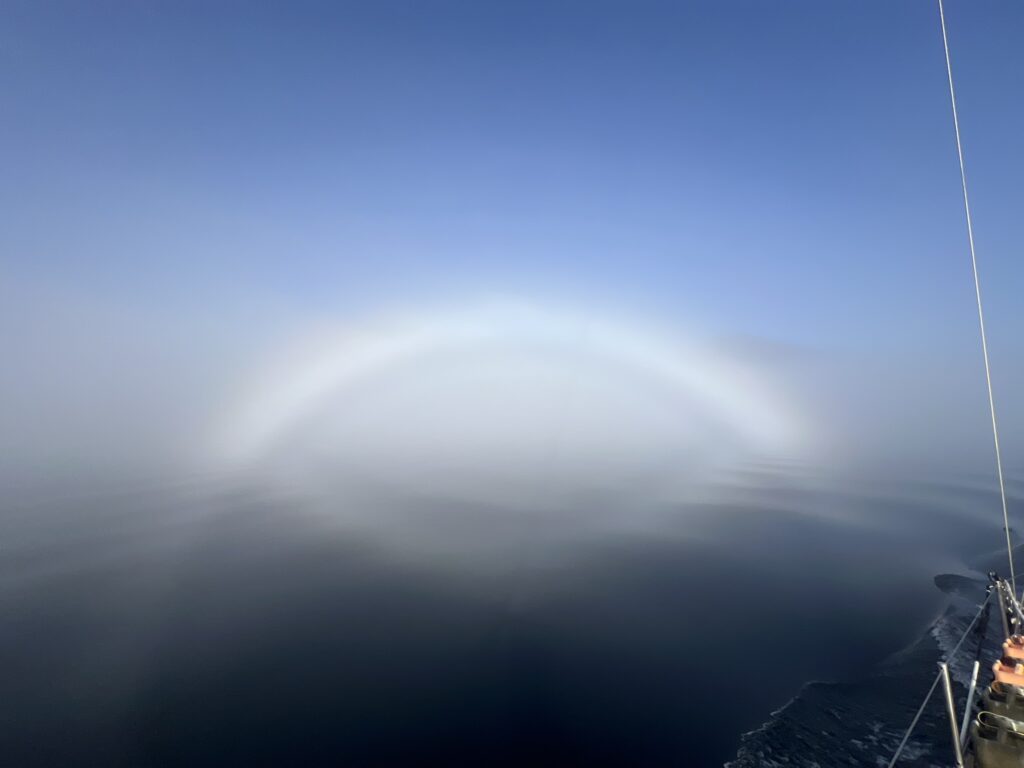
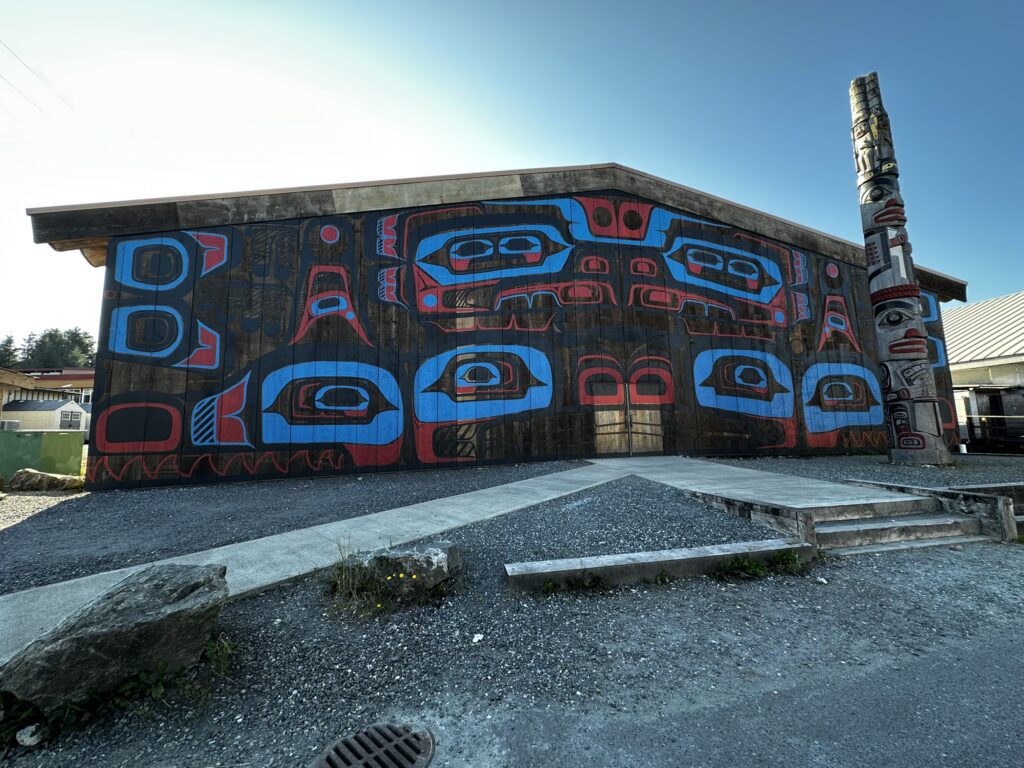
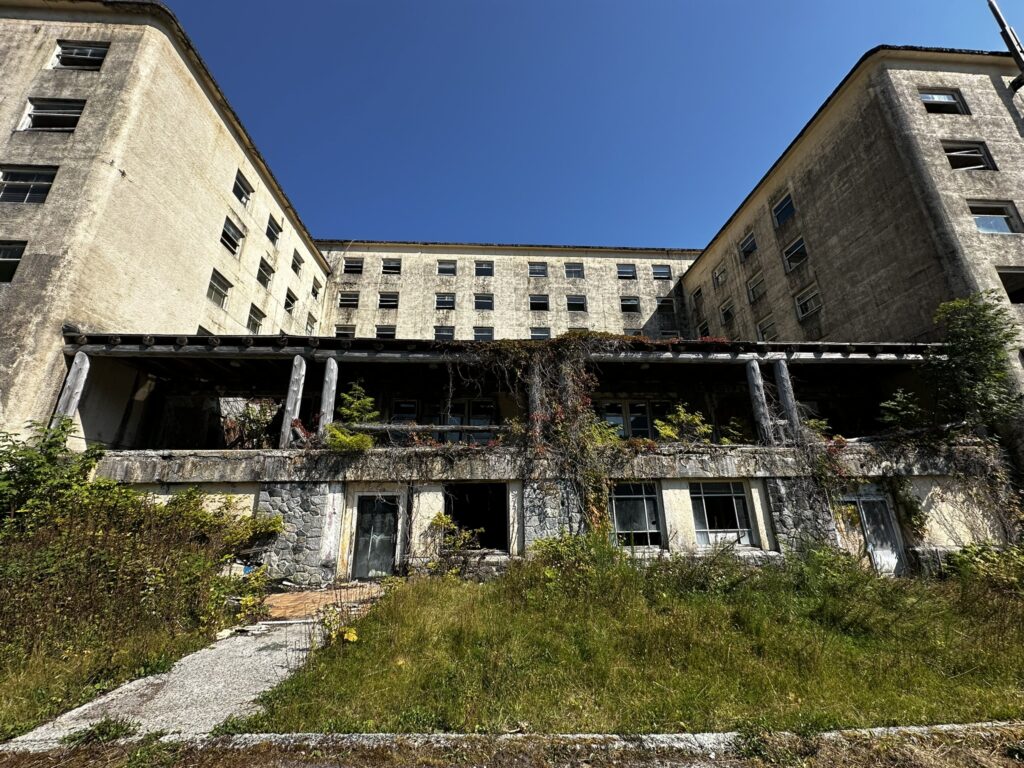
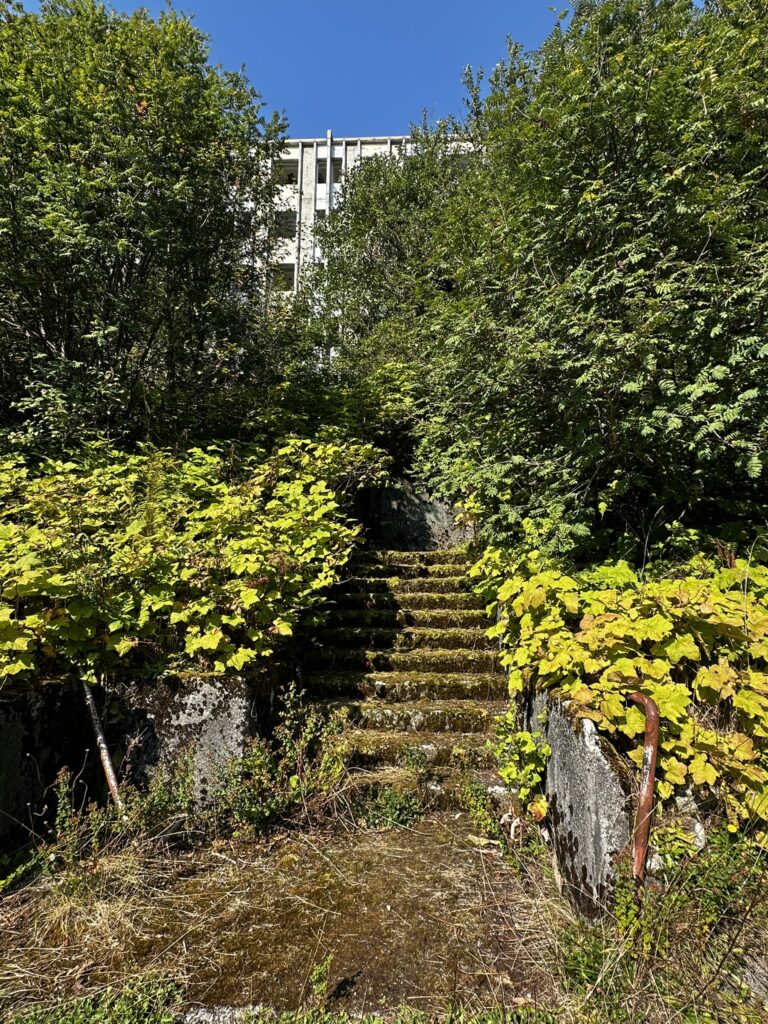
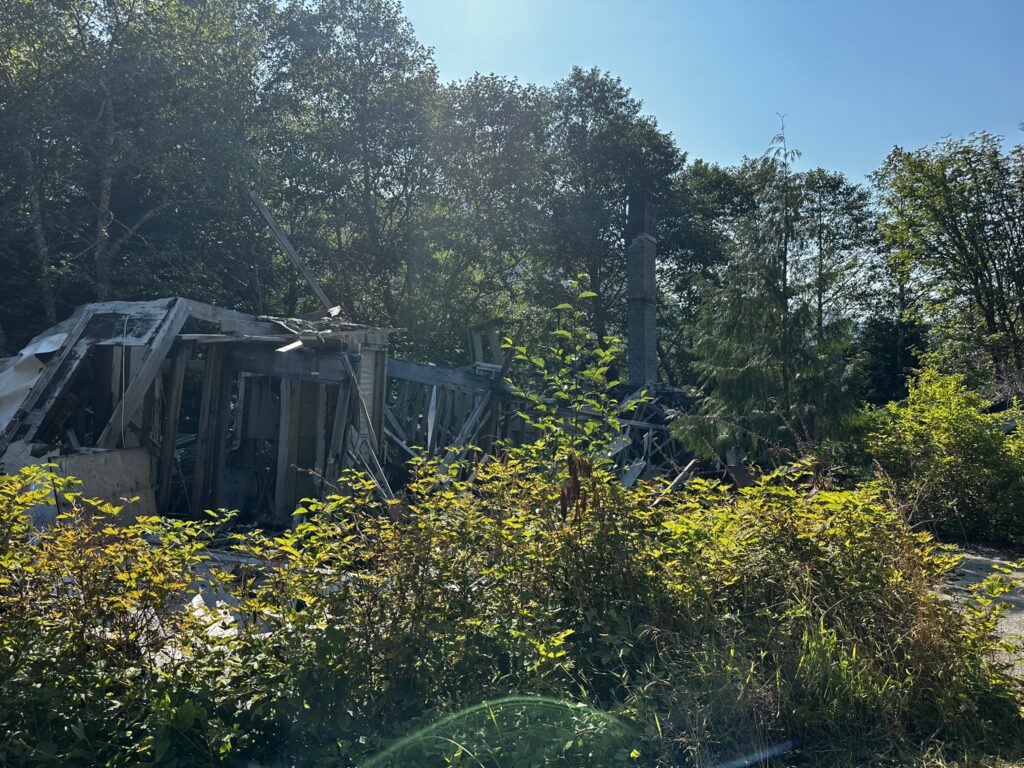
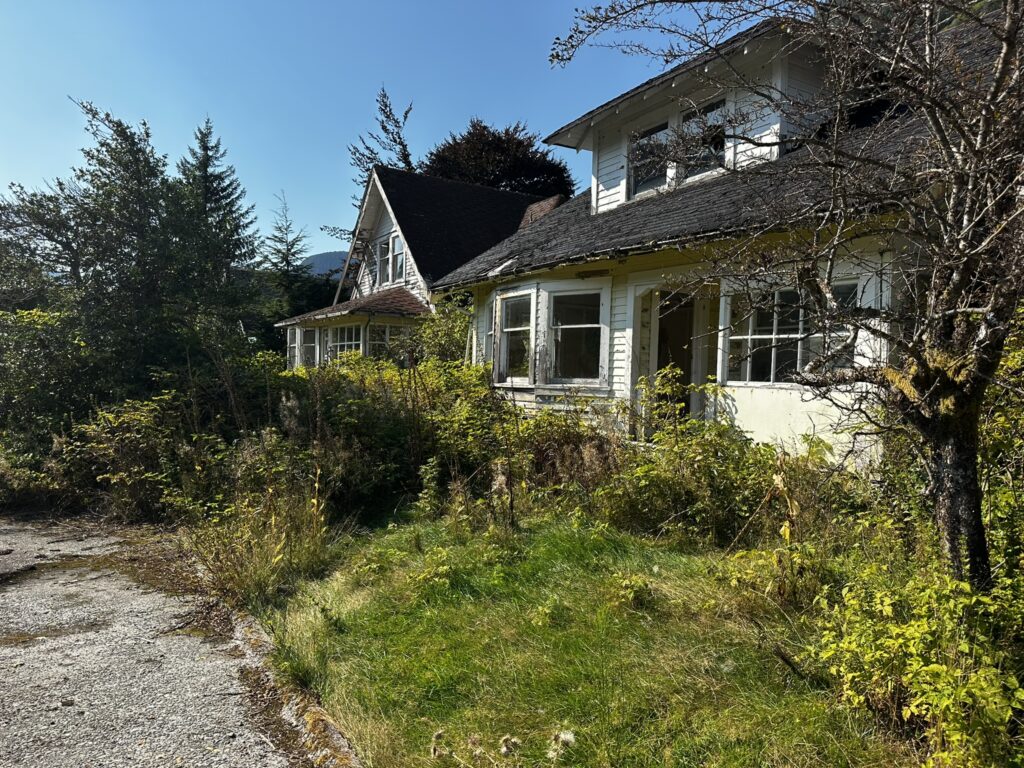
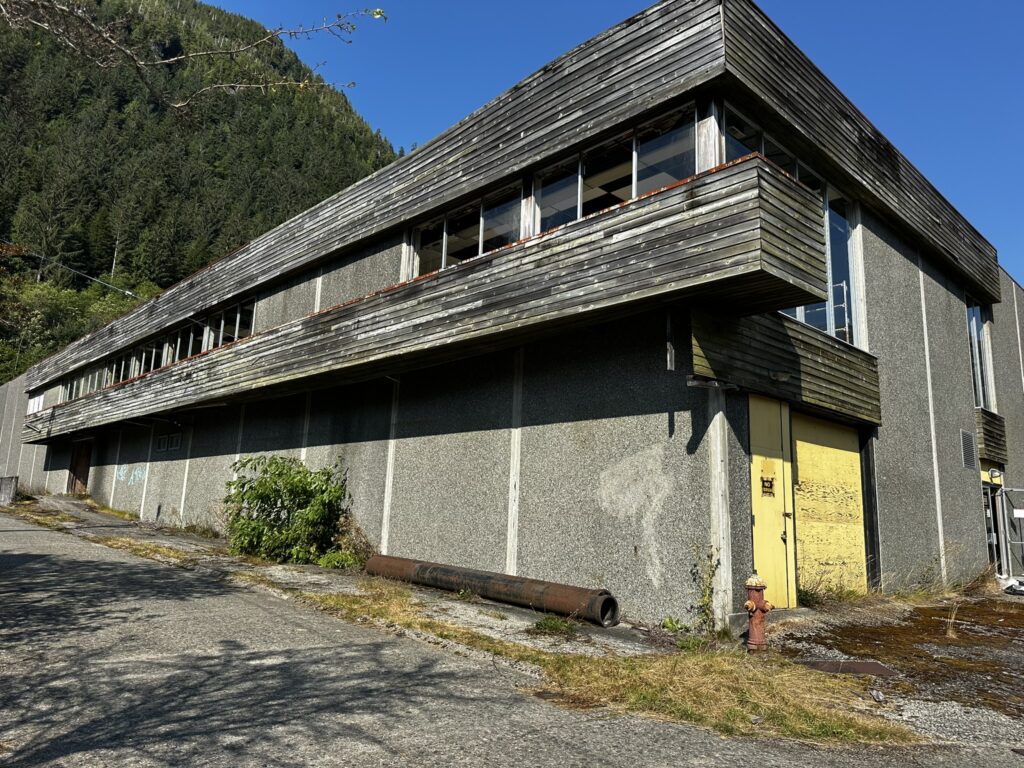
After a few peaceful days in Shearwater, we topped off the diesel tanks and headed off to the town of Ocean Falls. This is an old pulp mill company town that has been largely abandoned leaving hulking remains of the old hotel, apartment complex, and homes. It was cool to wander amongst the old buildings although we did not enter any. This was a thriving town with a large pulp mill powered by the adjacent hydroelectric dam. In its heyday it had several thousand residents. The mill shut down for good in the 1980’s and the town now has only a few dozen residents. The dam continues to supply electrical power to the nearby communities of Ocean Falls, Shearwater and Bella Bella. It also now powers a Bitcoin mining operation. There is still ferry service, and a post office and the docks remain very well maintained. It was a fun stop where we explored the town and collected wild blackberries. We even met a fellow cruiser working in the post office with whom we had shared anchorage with in Tenacatita, Mexico. It’s a small cruising community.
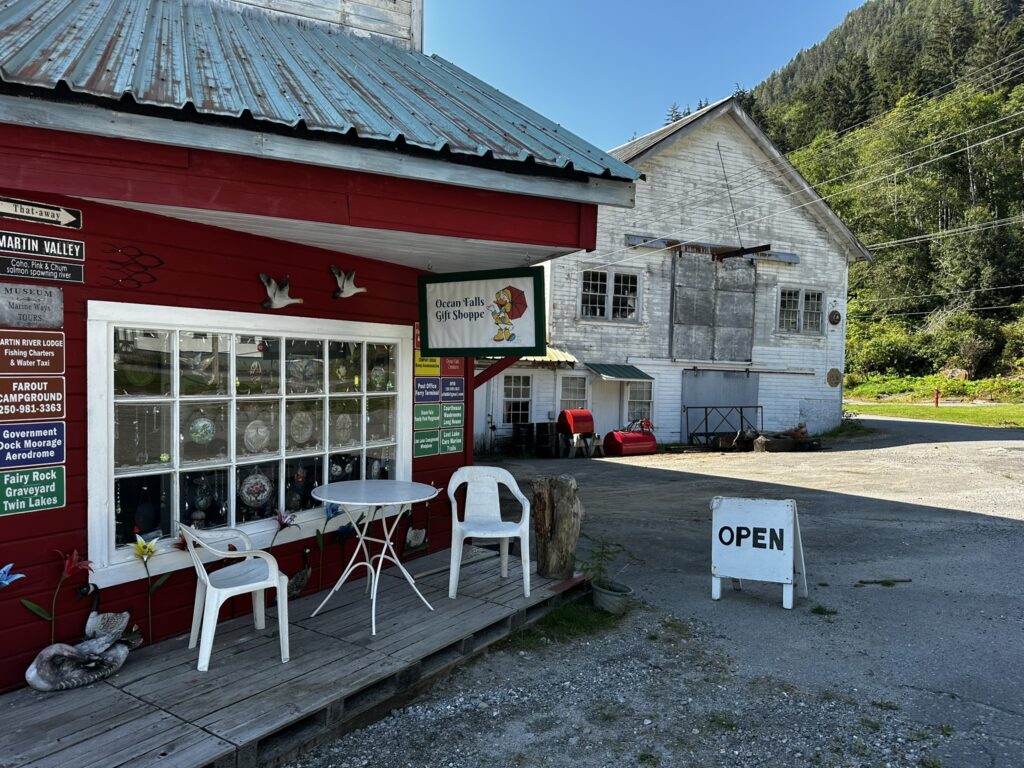
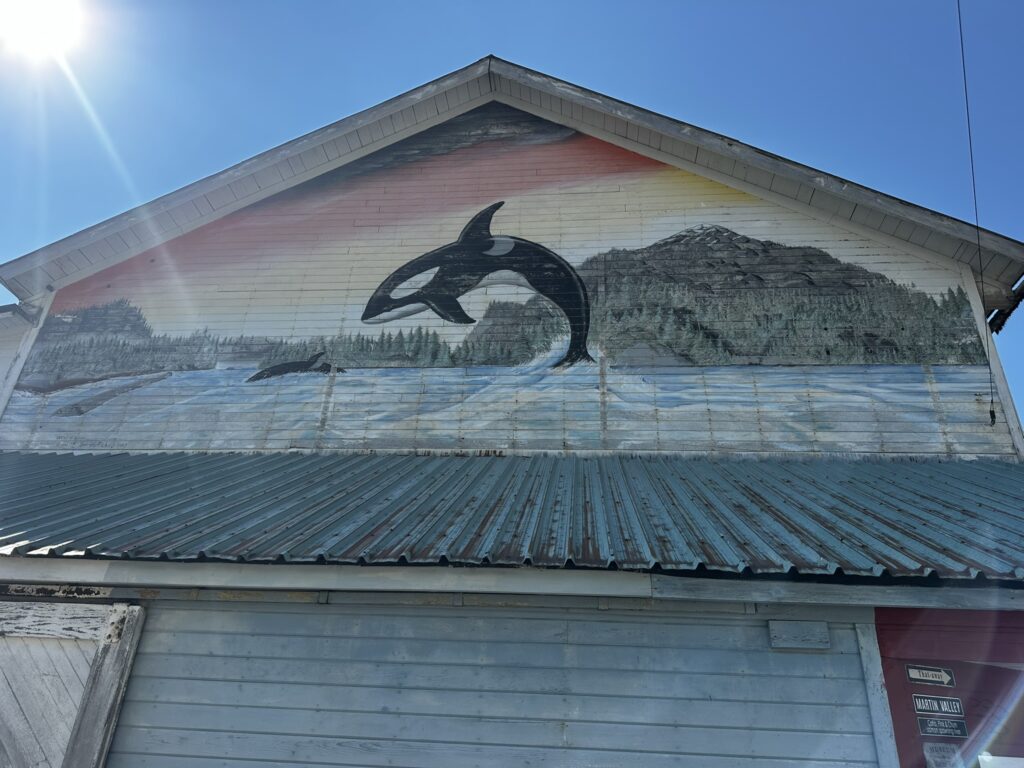
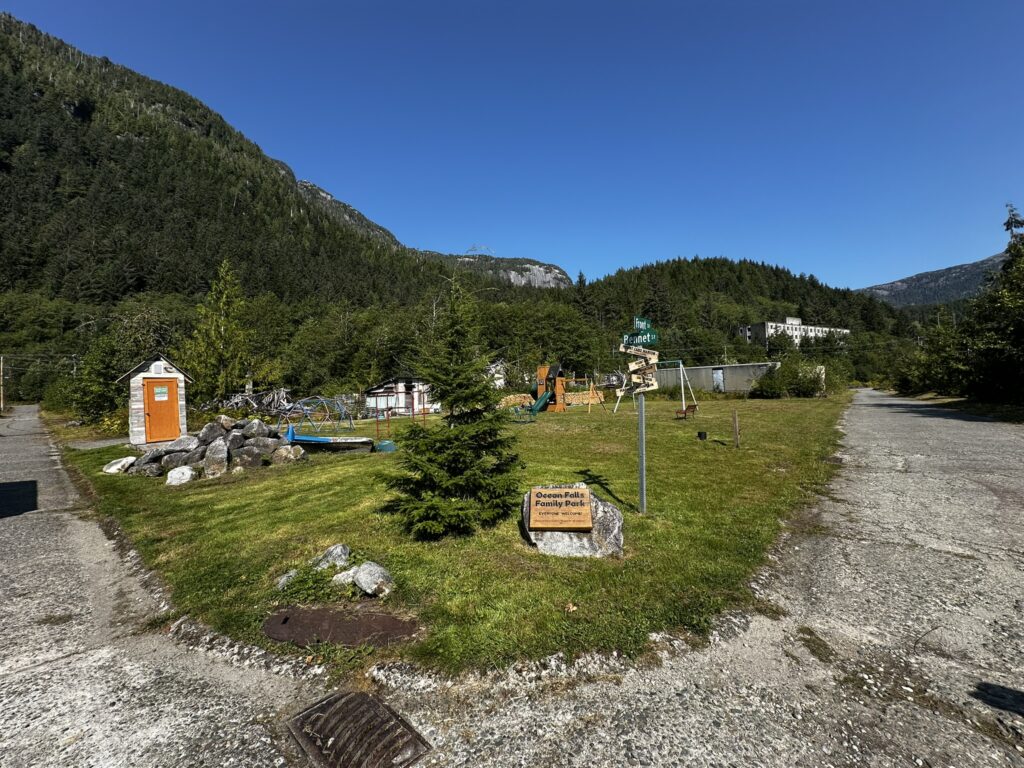
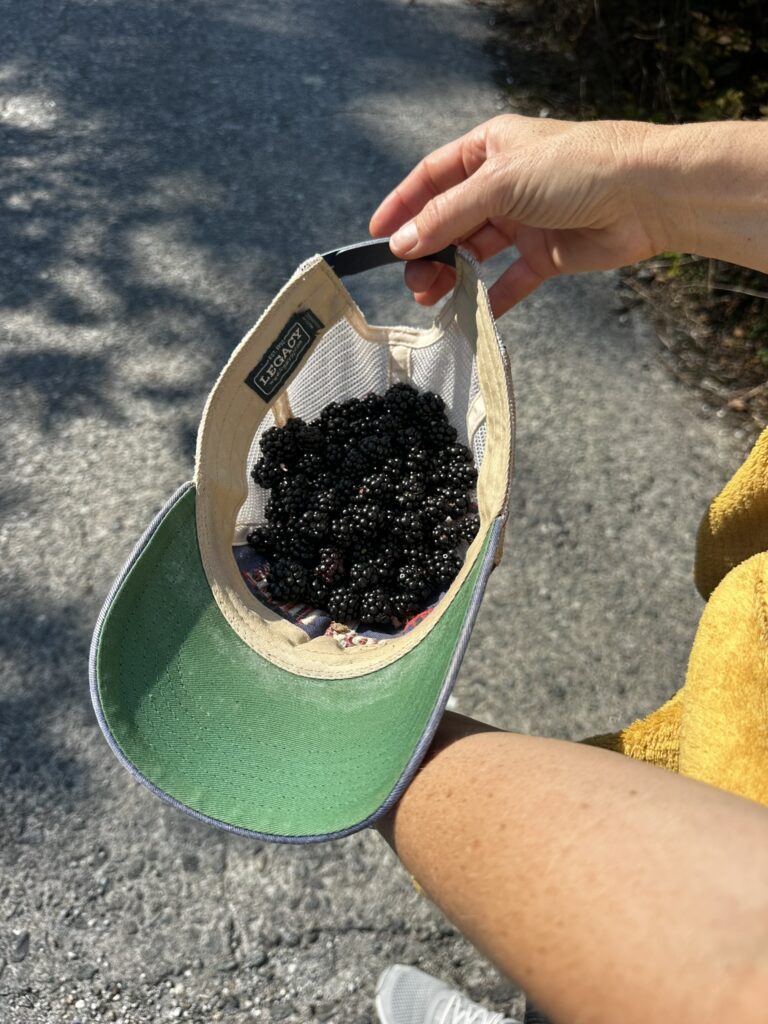
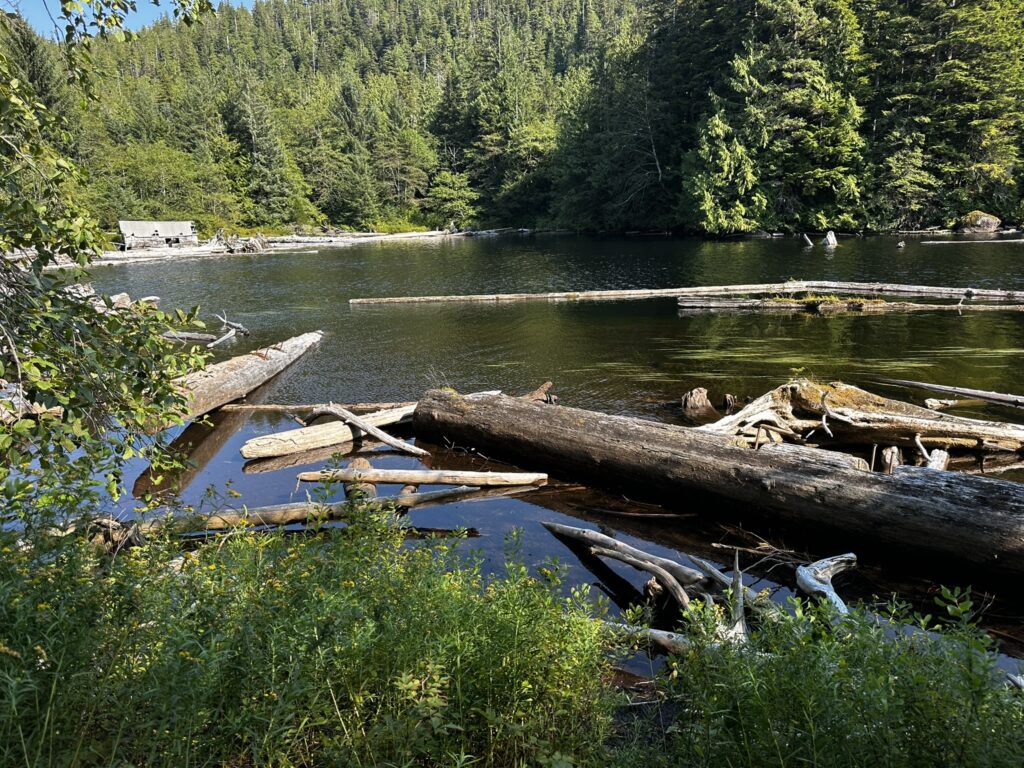
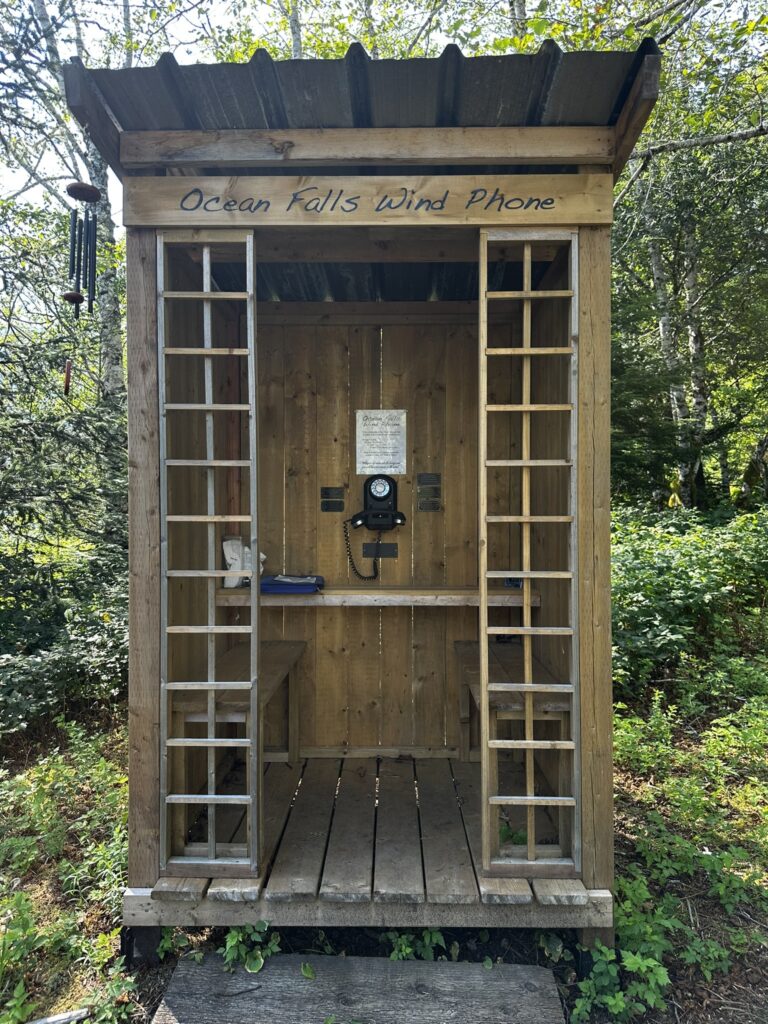
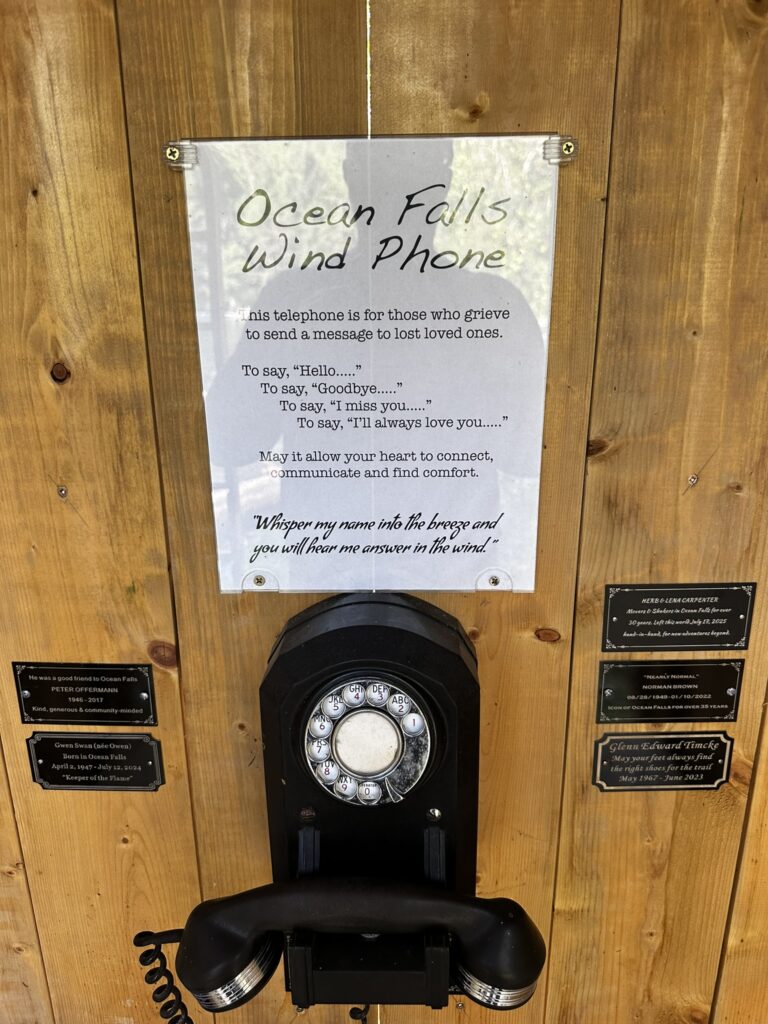
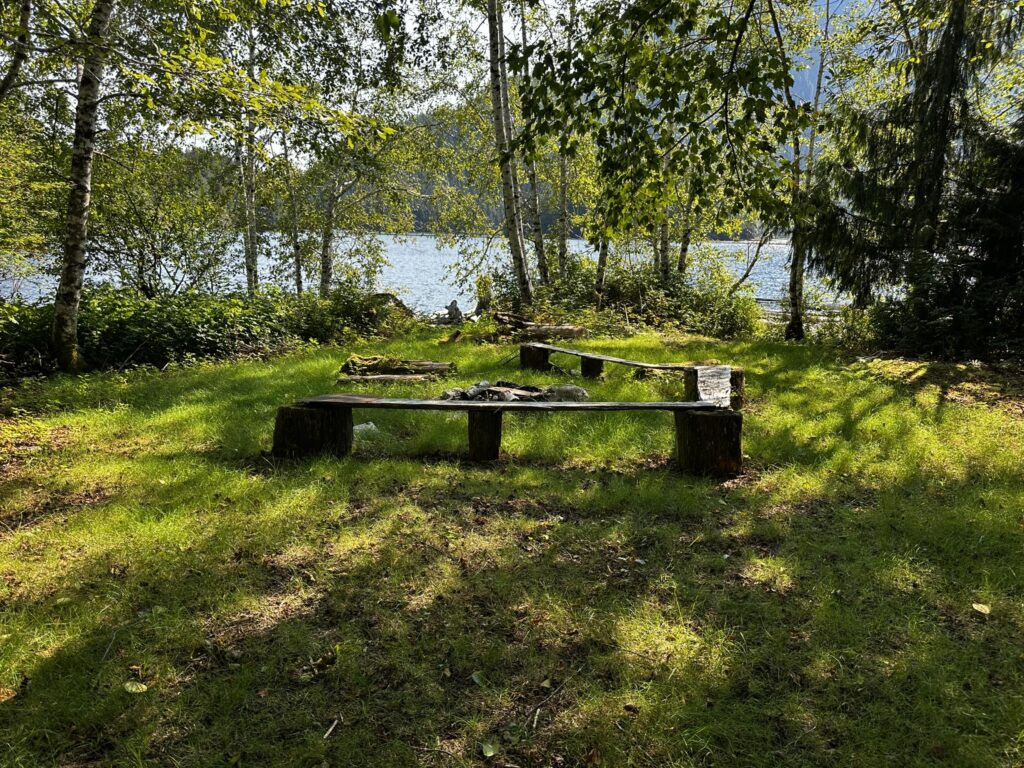
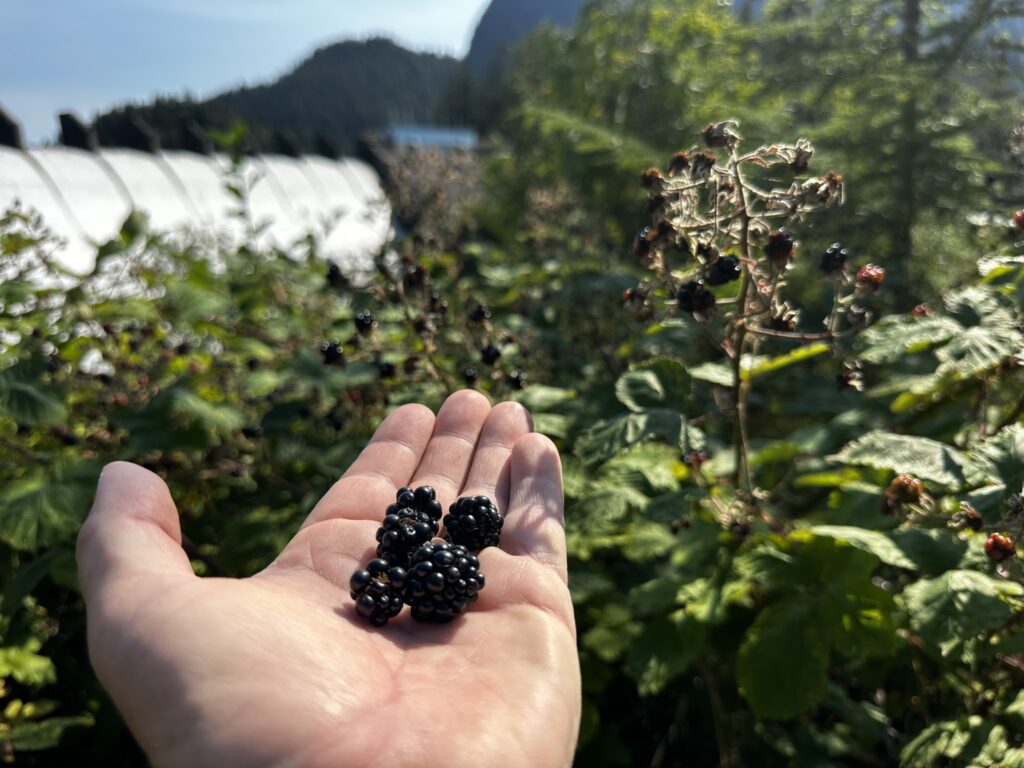
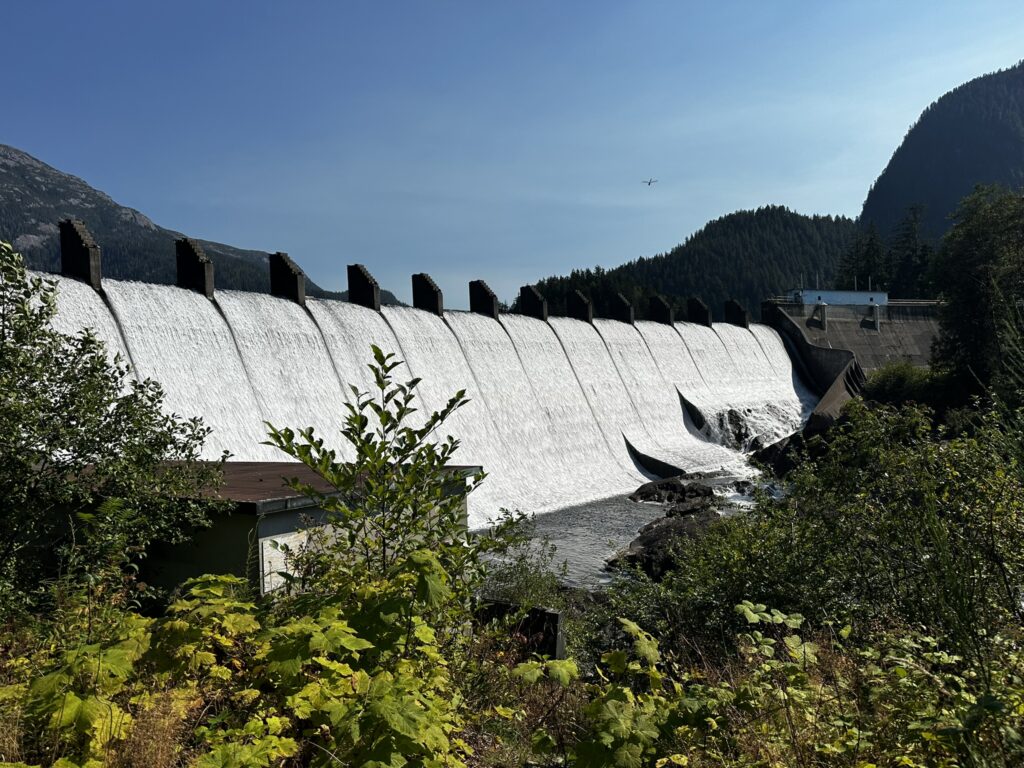
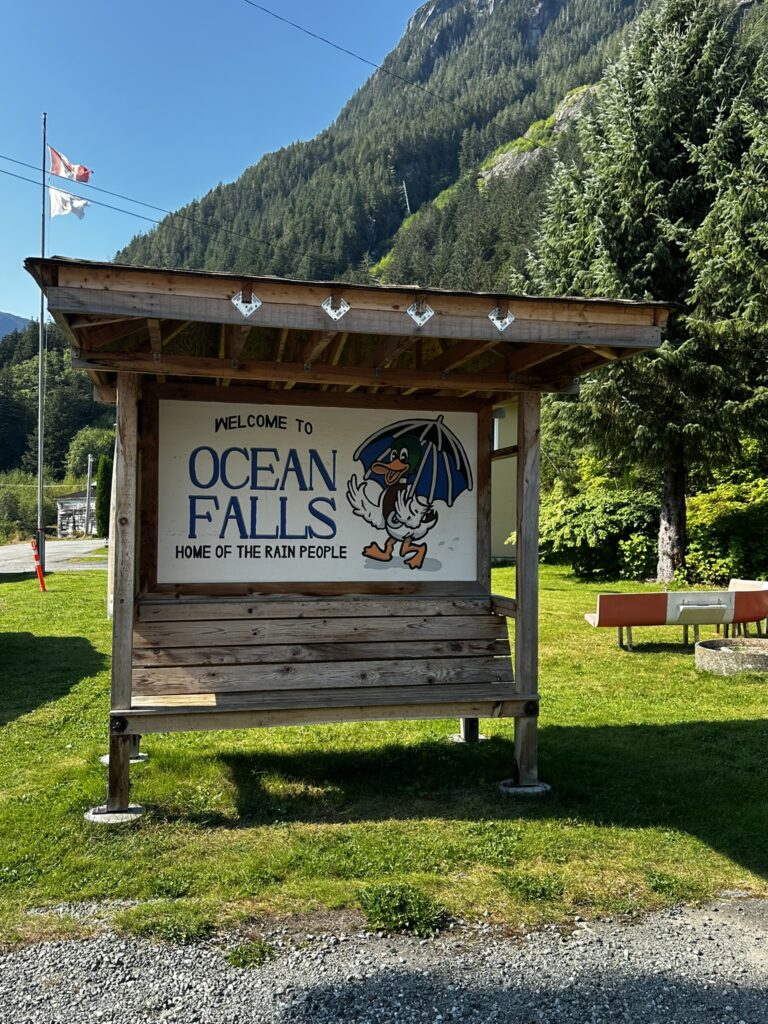
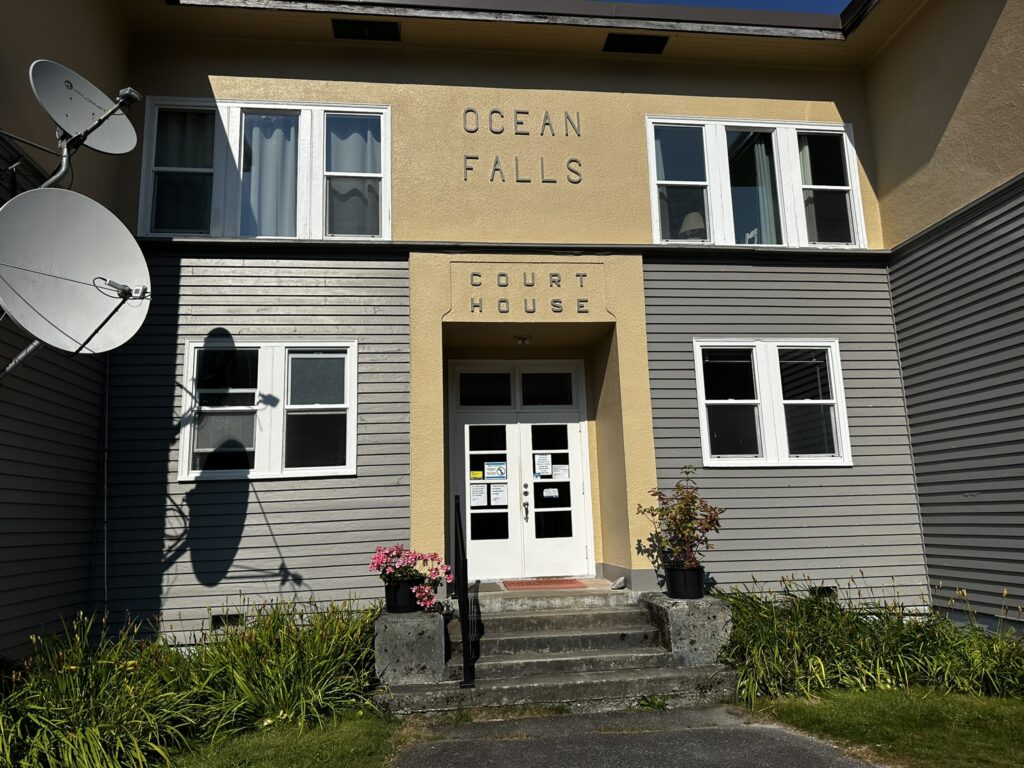
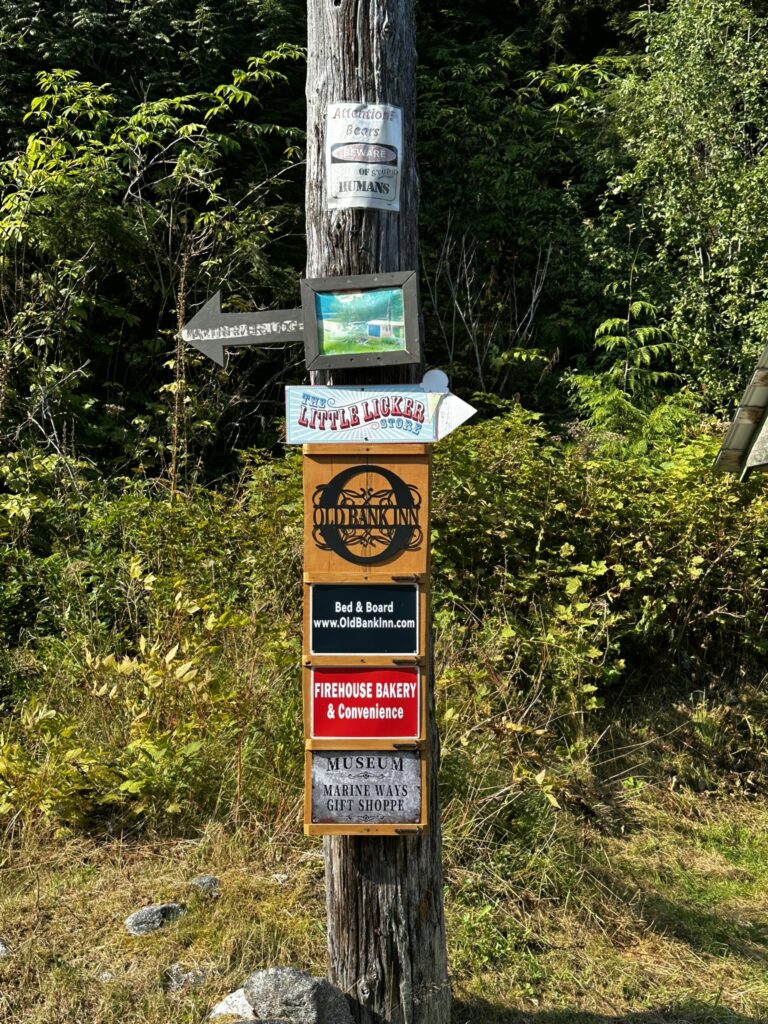
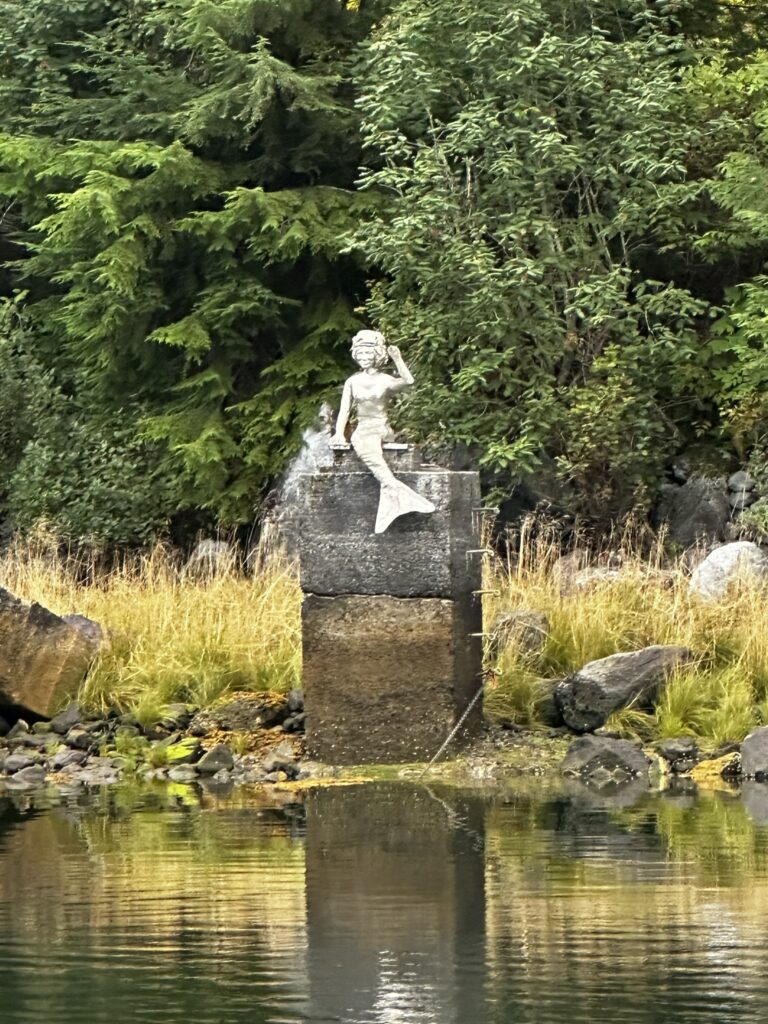
The ruins of Ocean Falls:
After a nice stay in Ocean Falls, we left the dock and pointed Tasi’s bow southward. We motored to Fury Cove where we anchored overnight before our leg around Cape Caution. Getting around this cape exposes one to the open ocean and complex tidal currents and fog. It is known to be quite challenging and downright dangerous in the wrong conditions. We lucked out and despite some fog, we had flat, calm seas the entire way to our anchorage in Blunden Harbor. The next day we headed to the village of Alert Bay where we anchored for a night. We took the dinghy to shore and walked around this First Nations village where we had good meal and some beer at the Nimpkish Hotel restaurant. It had a nice view overlooking the water and good seafood curry.
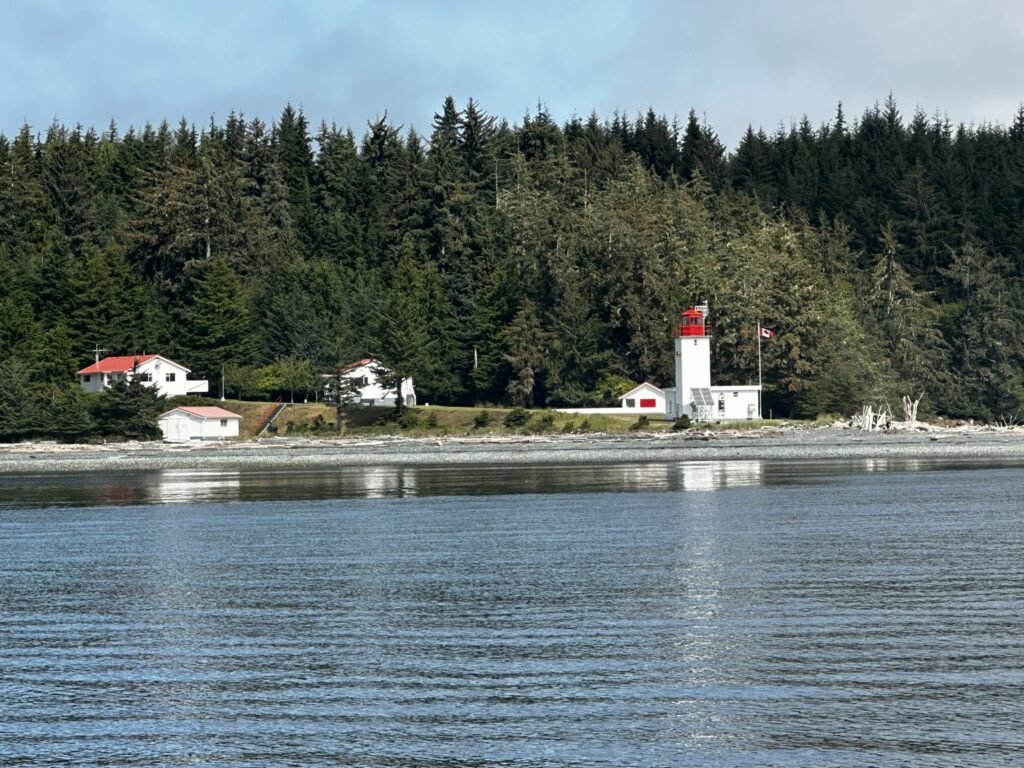
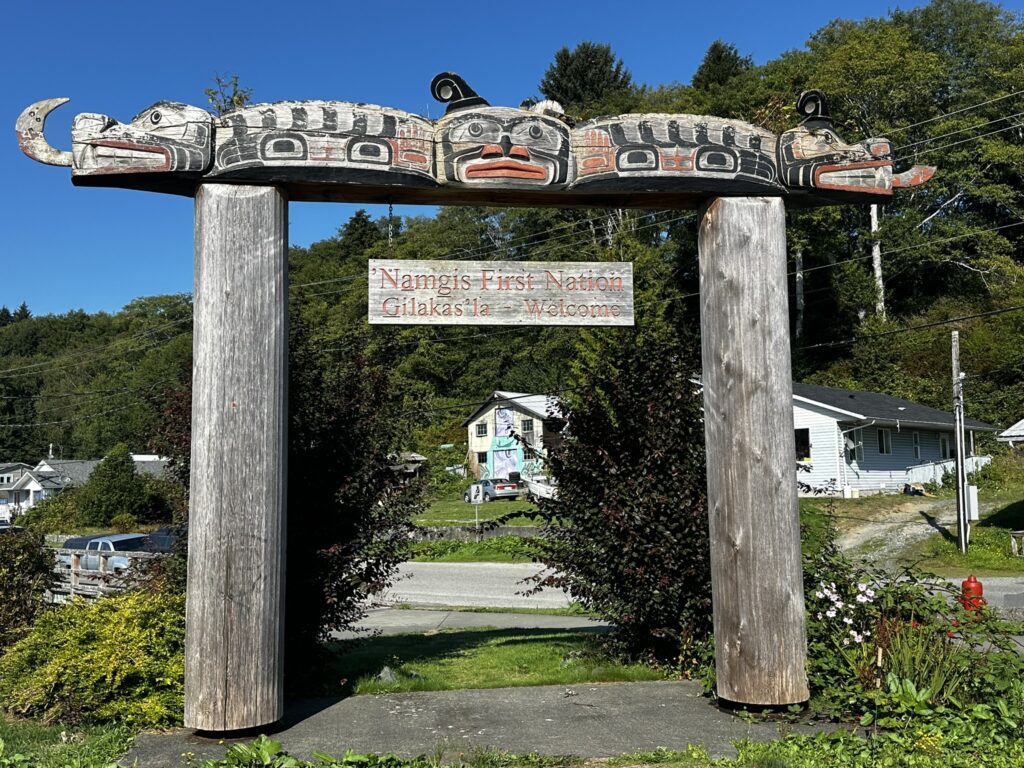
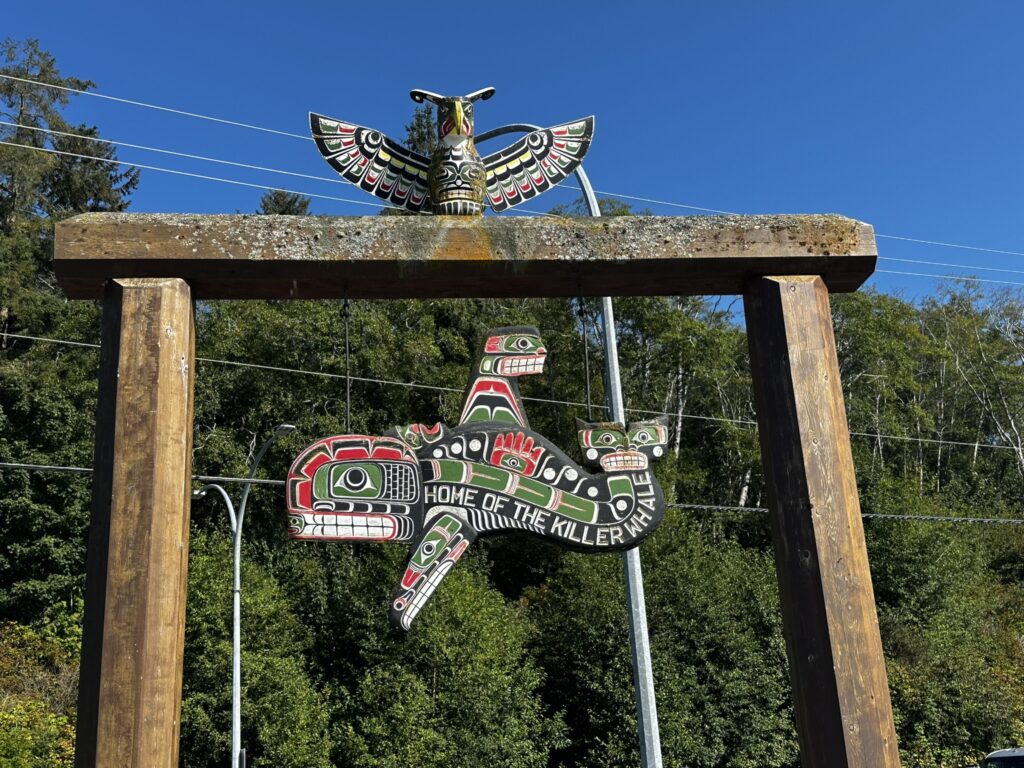
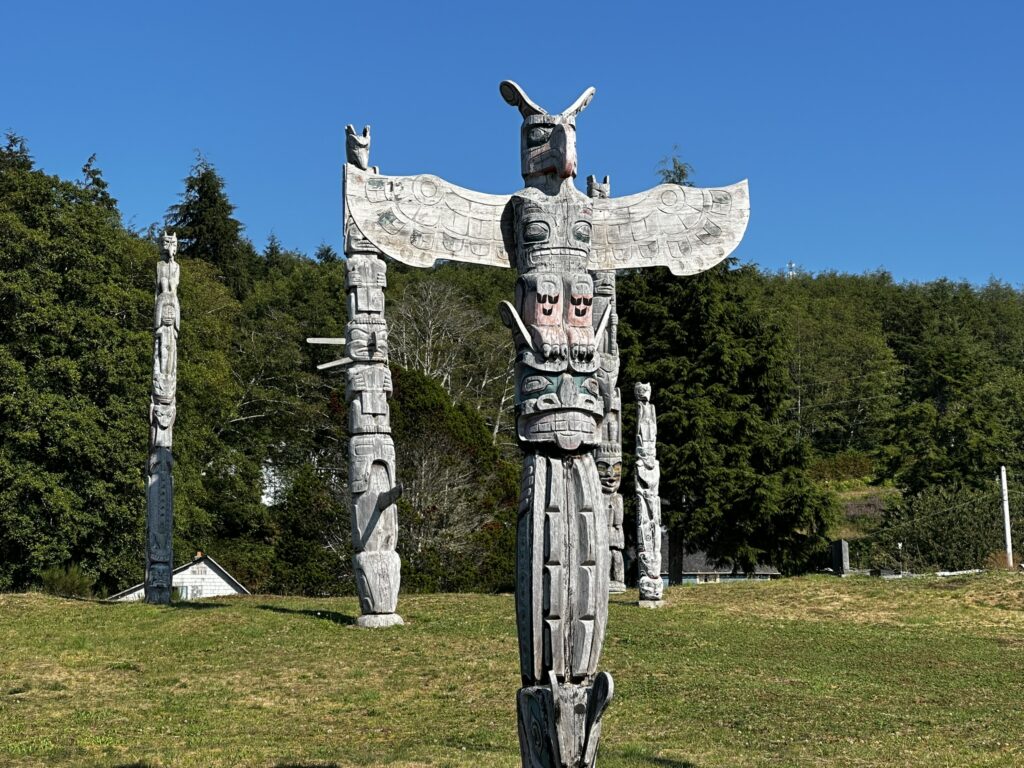
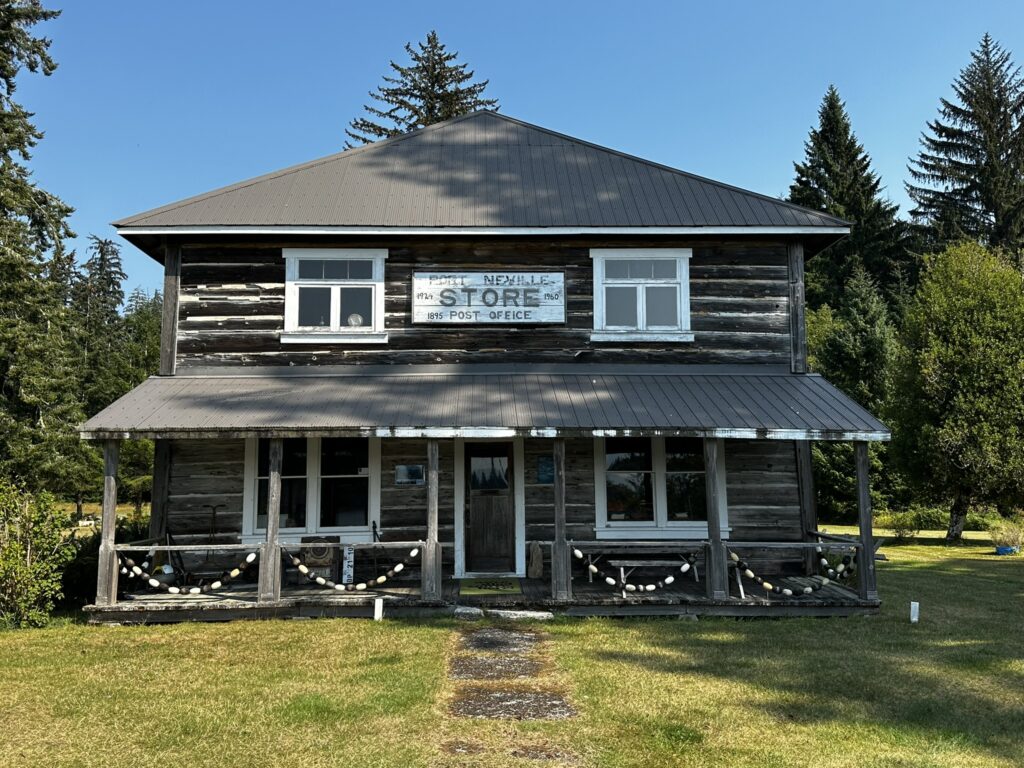
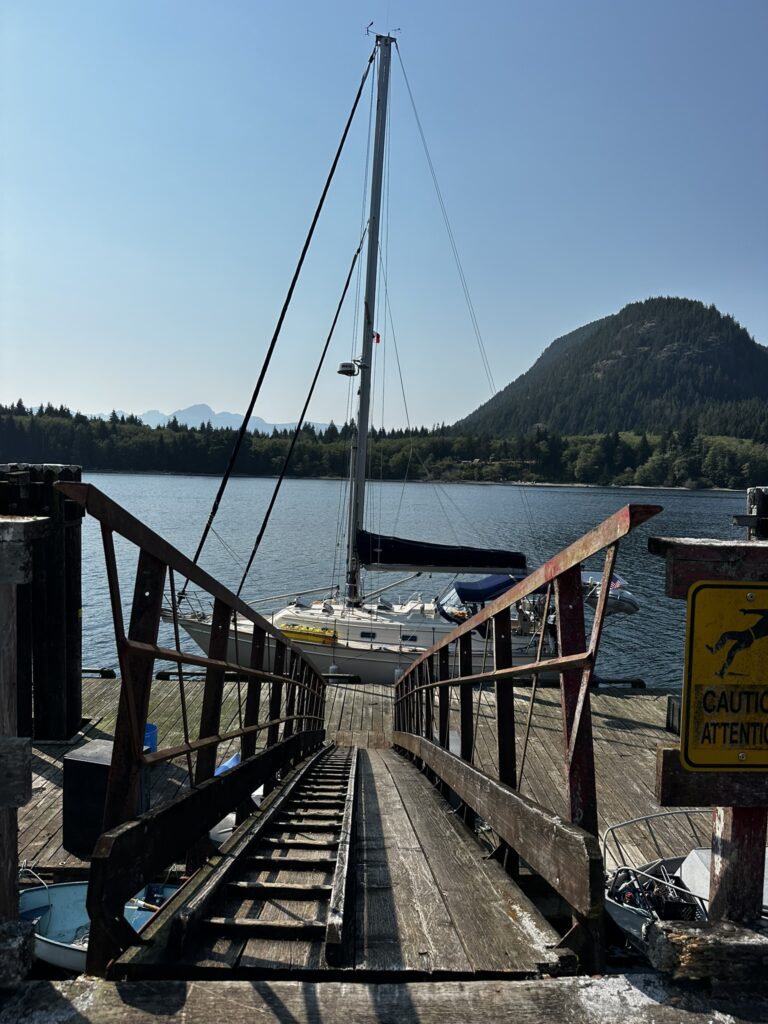
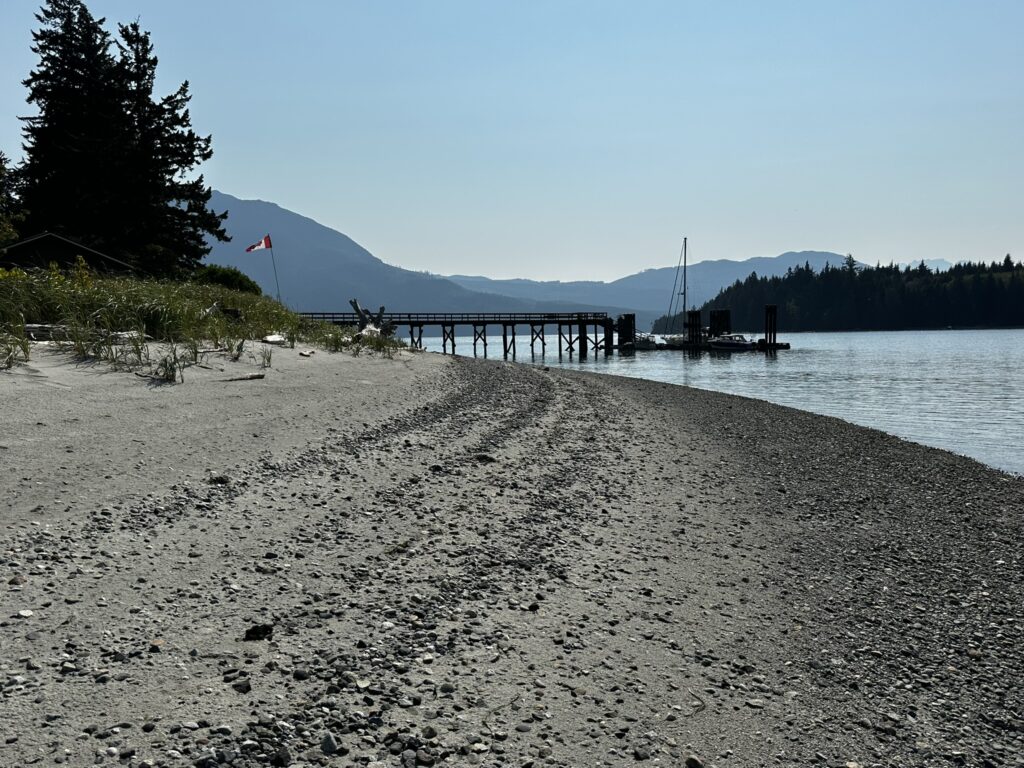
The next day we headed to Port Neville where we would stage for our last leg to Campbell River. Port Neville is a small locality that originated as a homestead. Although it once had post office and cafe, those are no longer there. However the government dock still remains and is a good place to tie up in settled weather. We enjoyed the sunshine and warm weather and even went swimming. The next day we had the challenging leg through Johnstone Strait, Discovery Passage, and finally through Seymore Narrows before arriving in Campbell River. This leg is notable for strong tidal currents and dangerous conditions which required precise timing so the currents are with you and most importantly so you approach Seymore Narrows at slack current. This notorious area has currents that reach up to 16 knots and create dangerous rapids, standing waves, upwellings, and whirlpools. Fortunately we arrived at slack and our passage through was uneventful.
Finally we had arrived at the Discovery Harbor in Campbell River where we were excited to spend time catching up with our close friends from SV StarrE!

I listened to a podcast that featured a segment on the original Wind Phone in Japan. Quite an innovative approach to grief/connection/therapy. I’m not surprised it has been implemented in such remote locales.
Can’t wait to see you guys back home!